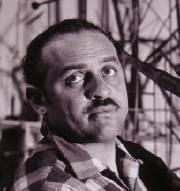
An African-American sculptor who at age 33 became an expatriate in Paris from America, Harold Cousins worked in a variety of mediums including stone, wood, metal and terra cotta, and in a variety of... Read full biography
An African-American sculptor who at age 33 became an expatriate in Paris from America, Harold Cousins worked in a variety of mediums including stone, wood, metal and terra cotta, and in a variety of styles from realism to total abstraction. In the 1950s and 1960s, he expressed his political views... Read full biography
An African-American sculptor who at age 33 became an expatriate in Paris from America, Harold Cousins worked in a variety of mediums including stone, wood, metal and terra cotta, and in a variety of styles from realism to total abstraction. In the 1950s and 1960s, he expressed his political views about racial integration in America with figurative works including Political Prisoner (1954), Slave (1963) and Standing Figure (1963), a silhouette suggestive of the Ku Klux Klan. By the time he left... Read full biography
An African-American sculptor who at age 33 became an expatriate in Paris from America, Harold Cousins worked in a variety of mediums including stone, wood, metal and terra cotta, and in a variety of styles from realism to total abstraction. In the 1950s and 1960s, he expressed his political views about racial integration in America with figurative works including Political Prisoner (1954), Slave (1963) and Standing Figure (1963), a silhouette suggestive of the Ku Klux Klan. By the time he left for Europe, Harold Cousins had already established a professional reputation in his own country. He grew up in northwest Washington DC in an area known as "Black Broadway". In 1943, he began studies at Howard University and was much influenced by... Read full biography
An African-American sculptor who at age 33 became an expatriate in Paris from America, Harold Cousins worked in a variety of mediums including stone, wood, metal and terra cotta, and in a variety of styles from realism to total abstraction. In the 1950s and 1960s, he expressed his political views about racial integration in America with figurative works including Political Prisoner (1954), Slave (1963) and Standing Figure (1963), a silhouette suggestive of the Ku Klux Klan. By the time he left for Europe, Harold Cousins had already established a professional reputation in his own country. He grew up in northwest Washington DC in an area known as "Black Broadway". In 1943, he began studies at Howard University and was much influenced by Alaine Locke, art historian and writer who encouraged pride and interest in African art... Read full biography
Harold Cousins - Artist Info
About Harold Cousins: Books
Books & Publications (5)
Publications based on askART research. List may not be comprehensive.
Welded Sculpture of the 20th Century (Exhibition catalog)
2000
Collischan, Judy
0 pages (color)
African-American Art, 20th Century Masterworks, VII (Exhibition catalog)
2000
Editor, Michael Rosenfeld Gallery
0 pages (color)
Who Was Who in American Art, 1564-1975: Three Volumes
1999
Falk, Peter Hastings (Editor)
3,724 pages
Paris Noir, African-Americans in the City of Light (Exhibition catalog)
1996
Stoval, Tyler
0 pages (color)
Afro-American Artists: A Bio-Bibliographical Directory