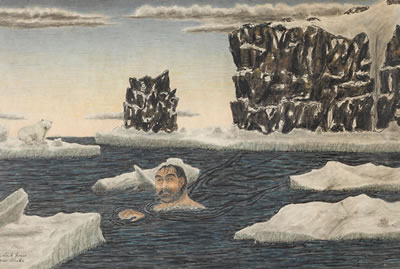
Born in 1900 near Cape Espenberg at the south entrance to Kotzebue Sound in Alaska, James Moses became known for his drawing and painting of people, places, and events that he knew about first hand.... Read full biography
Born in 1900 near Cape Espenberg at the south entrance to Kotzebue Sound in Alaska, James Moses became known for his drawing and painting of people, places, and events that he knew about first hand. Many of his themes included shamans, Eskimo legends, and the coming of white men to Alaska. Often... Read full biography
Born in 1900 near Cape Espenberg at the south entrance to Kotzebue Sound in Alaska, James Moses became known for his drawing and painting of people, places, and events that he knew about first hand. Many of his themes included shamans, Eskimo legends, and the coming of white men to Alaska. Often for an additional five dollars, a buyer could get an interpretive statement by his wife, Bessie Moses. He used a variety of media, primarily ink, watercolor, or oil-based pencil on paper or poster... Read full biography
Born in 1900 near Cape Espenberg at the south entrance to Kotzebue Sound in Alaska, James Moses became known for his drawing and painting of people, places, and events that he knew about first hand. Many of his themes included shamans, Eskimo legends, and the coming of white men to Alaska. Often for an additional five dollars, a buyer could get an interpretive statement by his wife, Bessie Moses. He used a variety of media, primarily ink, watercolor, or oil-based pencil on paper or poster board. His style was realistic, and skillful shading gave a sense of depth to his work. Moses was orphaned at a young age and raised by an uncle who lived by trapping and hunting. He had little formal education, and at age 14 began a job at the Magid... Read full biography
Born in 1900 near Cape Espenberg at the south entrance to Kotzebue Sound in Alaska, James Moses became known for his drawing and painting of people, places, and events that he knew about first hand. Many of his themes included shamans, Eskimo legends, and the coming of white men to Alaska. Often for an additional five dollars, a buyer could get an interpretive statement by his wife, Bessie Moses. He used a variety of media, primarily ink, watercolor, or oil-based pencil on paper or poster board. His style was realistic, and skillful shading gave a sense of depth to his work. Moses was orphaned at a young age and raised by an uncle who lived by trapping and hunting. He had little formal education, and at age 14 began a job at the Magid store in Deering. He did drawing in his spare time, and the wife of the store owner was so impressed she sent the drawings to Fairbanks for people t... Read full biography
James Kivetoruk Moses - Artist Info
About James Kivetoruk Moses: Books
Books & Publications (8)
Publications based on askART research. List may not be comprehensive.
The Artists Bluebook 34,000 North American Artists to March 2005
2005
AskART.com Inc. - Dunbier, Lonnie Pierson (Editor)
479 pages
A Legacy of Arctic Art
1996
Ray, Dorothy Jean
0 pages
Painting in the North Alaskan Art in the Anchorage Museum
1993
Woodward, Kesler E
160 pages (color)
Shared Visions Native American Painters & Sculptors (Exhibition catalog)
1991
Archuleta, M/R R Strickland
110 pages (color)
Drawn from the Surroundings: Elkus Collection of Eskimo Paintings
1990
Yorba, Jonathan
0 pages
Painting in the North: Alaskan Art in the Anchorage Museum of Art
1983
Kesler, Woodward
0 pages
American Indian Painters: A Biographical Directory