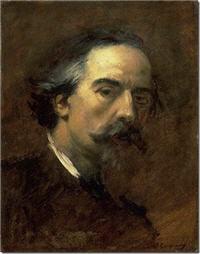
Jean-Baptiste Carpeaux (May 11, 1827 - October 12, 1875) was a French sculptor and painter. Born in Valenciennes, Nord, son of a mason, his early studies were under François Rude. Carpeaux entered... Read full biography
Jean-Baptiste Carpeaux (May 11, 1827 - October 12, 1875) was a French sculptor and painter. Born in Valenciennes, Nord, son of a mason, his early studies were under François Rude. Carpeaux entered the Ecole des Beaux-Arts in 1844 and won the Prix de Rome in 1854, and moving to Rome to find... Read full biography
Jean-Baptiste Carpeaux (May 11, 1827 - October 12, 1875) was a French sculptor and painter. Born in Valenciennes, Nord, son of a mason, his early studies were under François Rude. Carpeaux entered the Ecole des Beaux-Arts in 1844 and won the Prix de Rome in 1854, and moving to Rome to find inspiration, he there studied the works of Michelangelo, Donatello and Verrocchio. Staying in Rome from 1854 to 1861, he obtained a taste for movement and spontaneity, which he joined with the great... Read full biography
Jean-Baptiste Carpeaux (May 11, 1827 - October 12, 1875) was a French sculptor and painter. Born in Valenciennes, Nord, son of a mason, his early studies were under François Rude. Carpeaux entered the Ecole des Beaux-Arts in 1844 and won the Prix de Rome in 1854, and moving to Rome to find inspiration, he there studied the works of Michelangelo, Donatello and Verrocchio. Staying in Rome from 1854 to 1861, he obtained a taste for movement and spontaneity, which he joined with the great principles of baroque art. Carpeaux sought real life subjects in the streets and broke with the classical tradition. While a student in Rome, Carpeaux submitted a plaster version of Pêcheur Napolitain à la Coquille, the Neapolitan Fisherboy, to the French... Read full biography
Jean-Baptiste Carpeaux (May 11, 1827 - October 12, 1875) was a French sculptor and painter. Born in Valenciennes, Nord, son of a mason, his early studies were under François Rude. Carpeaux entered the Ecole des Beaux-Arts in 1844 and won the Prix de Rome in 1854, and moving to Rome to find inspiration, he there studied the works of Michelangelo, Donatello and Verrocchio. Staying in Rome from 1854 to 1861, he obtained a taste for movement and spontaneity, which he joined with the great principles of baroque art. Carpeaux sought real life subjects in the streets and broke with the classical tradition. While a student in Rome, Carpeaux submitted a plaster version of Pêcheur Napolitain à la Coquille, the Neapolitan Fisherboy, to the French Academy. He carved the marble version several years later, showing it in the Salon exhibition of 1863. It was purch... Read full biography
Jean-Baptiste Carpeaux - Artist Info
About Jean-Baptiste Carpeaux: Books
Books & Publications (1)
Publications based on askART research. List may not be comprehensive.
Accents on Artists A fact-filled pronunciation guide. Over 800 artist’s names you should know…