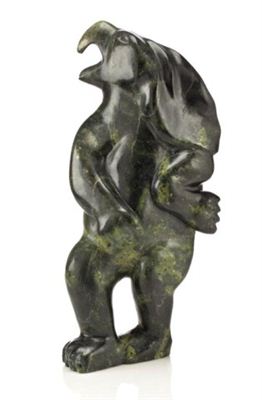
Qaqaq Ashoona was born in an outpost camp called Ikirasak, and lived on the land as a hunter well into his teenage years. At this time, he settled in Cape Dorset, but frequently moved back to live... Read full biography
Qaqaq Ashoona was born in an outpost camp called Ikirasak, and lived on the land as a hunter well into his teenage years. At this time, he settled in Cape Dorset, but frequently moved back to live out on the land in camps for extended periods. Qaqaq began carving around 1953. No longer able to... Read full biography
Qaqaq Ashoona was born in an outpost camp called Ikirasak, and lived on the land as a hunter well into his teenage years. At this time, he settled in Cape Dorset, but frequently moved back to live out on the land in camps for extended periods. Qaqaq began carving around 1953. No longer able to survive through hunting and trapping exclusively, Qaqaq soon started carving as a means to support his family. Taking his boat to mine his own stone, Qaqaq did much of his carving at his outpost camp, and... Read full biography
Qaqaq Ashoona was born in an outpost camp called Ikirasak, and lived on the land as a hunter well into his teenage years. At this time, he settled in Cape Dorset, but frequently moved back to live out on the land in camps for extended periods. Qaqaq began carving around 1953. No longer able to survive through hunting and trapping exclusively, Qaqaq soon started carving as a means to support his family. Taking his boat to mine his own stone, Qaqaq did much of his carving at his outpost camp, and took great care with detail for each sculpture, using only hand tools to carve.*. *”An Interview with Qaqaq Ashoona” (conducted by Simeonie Kunnuk, translated by Taina Ipellie), Inuit Art Quarterly, Summer 1996, Vol. 11, No. 2, page 21-27. Source:.... Read full biography
Qaqaq Ashoona was born in an outpost camp called Ikirasak, and lived on the land as a hunter well into his teenage years. At this time, he settled in Cape Dorset, but frequently moved back to live out on the land in camps for extended periods. Qaqaq began carving around 1953. No longer able to survive through hunting and trapping exclusively, Qaqaq soon started carving as a means to support his family. Taking his boat to mine his own stone, Qaqaq did much of his carving at his outpost camp, and took great care with detail for each sculpture, using only hand tools to carve.*. *”An Interview with Qaqaq Ashoona” (conducted by Simeonie Kunnuk, translated by Taina Ipellie), Inuit Art Quarterly, Summer 1996, Vol. 11, No. 2, page 21-27. Source:. Website of Spirit Wrestler Gallery. From askART.com. Researchers looking for additional information about Inu... Read full biography
Kaka (Qaqaq) Ashoona - Artist Info
About Kaka (Qaqaq) Ashoona: Books
Books & Publications (3)
Publications based on askART research. List may not be comprehensive.
Early Masters: Inuit Sculpture 1949-1955 (Winnipeg Art Gallery)
2006
Wight, Darlene Coward
192 pages (color)
In the Shadow of the Sun: Perspectives on Contemporary Native Art (Canadian Museum of Civilization) (Exhibition catalog)
1993
McMaster, Gerald et al
538 pages
Cape Dorset (Winnipeg Art Gallery) (Exhibition catalog)