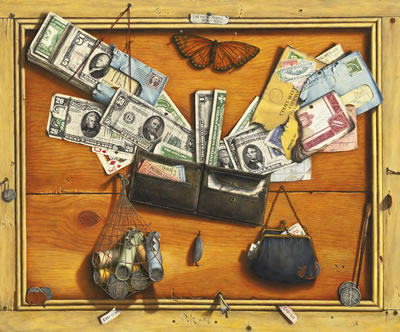
Born in Michigan, Otis Kaye is considered the last of the trompe l'oeil still life painters, recognized primarily for his skill with American currency. At that time, the early part of the 20th... Read full biography
Born in Michigan, Otis Kaye is considered the last of the trompe l'oeil still life painters, recognized primarily for his skill with American currency. At that time, the early part of the 20th century, people were highly interested in this subject matter because the Federal Government was just... Read full biography
Born in Michigan, Otis Kaye is considered the last of the trompe l'oeil still life painters, recognized primarily for his skill with American currency. At that time, the early part of the 20th century, people were highly interested in this subject matter because the Federal Government was just beginning to print uniform money, replacing that which individual banks issued. Kaye was also an etcher and did exquisitely detailed drawings of birds, insects and animals. Although he lived well into the... Read full biography
Born in Michigan, Otis Kaye is considered the last of the trompe l'oeil still life painters, recognized primarily for his skill with American currency. At that time, the early part of the 20th century, people were highly interested in this subject matter because the Federal Government was just beginning to print uniform money, replacing that which individual banks issued. Kaye was also an etcher and did exquisitely detailed drawings of birds, insects and animals. Although he lived well into the 20th century, he was part of the still life tradition of 19th century trompe l'oeil painters, which included John Haberle, John Frederick Peto and William Harnett. Kaye was born to European immigrants and lived briefly in Michigan where his parents... Read full biography
Born in Michigan, Otis Kaye is considered the last of the trompe l'oeil still life painters, recognized primarily for his skill with American currency. At that time, the early part of the 20th century, people were highly interested in this subject matter because the Federal Government was just beginning to print uniform money, replacing that which individual banks issued. Kaye was also an etcher and did exquisitely detailed drawings of birds, insects and animals. Although he lived well into the 20th century, he was part of the still life tradition of 19th century trompe l'oeil painters, which included John Haberle, John Frederick Peto and William Harnett. Kaye was born to European immigrants and lived briefly in Michigan where his parents had a successful lumber business. His father died in a mill accident, and the family sold the business, and he and his... Read full biography
Otis Kaye - Artist Info
About Otis Kaye: Books
Books & Publications (15)
Publications based on askART research. List may not be comprehensive.
Otis Kaye: Money, Mystery, and Mastery
2015
Bradburne, James M. and Geraldine Banks
187 pages (color)
Deja Vu All Over Again The Riddle of Otis Kaye
2009
Bradburne, James
101 pages (color)
Amazing Illusions: The Wonders of Trompe L'Oeil
2009
Fondazione Palazzo Strozzi
47 pages (color)
Art and Illusions: Masterpieces of Trompe L'Oeil from Antiquity to the Present Day (Exhibition catalog)
2009
Fondazione Palazzo Strozzi Anna Maria Giusti Curator
318 pages (color)
The Artists Bluebook 34,000 North American Artists to March 2005
2005
AskART.com Inc. - Dunbier, Lonnie Pierson (Editor)
479 pages
Davenport's Art Reference: The Gold Edition
2005
Davenport, Ray
2,421 pages
Otis Kaye Trompe L'Oeil Master of Appropriation
2002
Goley, MaryAnne
30 pages (color)
110 Years of American Art:1830-1940 (Spanierman Galleries, LLC) (Exhibition catalog)
2001
Spanierman, Deborah (essay)
136 pages (color)
Who Was Who in American Art, 1564-1975: Three Volumes
1999
Falk, Peter Hastings (Editor)
3,724 pages
Trompe l'oeil: The Art of Deception (Exhibition catalog)
1997
Dawson, Nancy
6 pages (color)
Art & Money (University of Chicago)
1995
Shell, Marc
230 pages (color)
A Private View
1993
Cooper, Helen; Nancy Shaw
0 pages (color)
American Masters Selections from the Gerald Peters Gallery (Exhibition catalog)
1990
Gerald Peters Gallery
114 pages (color)
Old Money
1988
Chambers, Bruce
0 pages (color)
Who Was Who in American Art: Artists Active Between 1898-1947