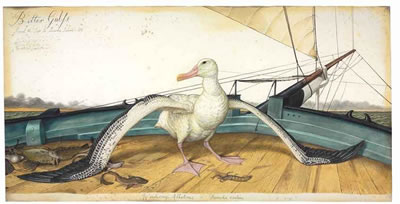
Creating work that resembles John James Audubon's classic images of wildlife and birds, Walton Ford subverts them to narrative painting whereby he comments on contemporary society such as its... Read full biography
Creating work that resembles John James Audubon's classic images of wildlife and birds, Walton Ford subverts them to narrative painting whereby he comments on contemporary society such as its desecration of nature. He showed early art talent as a child who was raised in Croton in the suburbs of New... Read full biography
Creating work that resembles John James Audubon's classic images of wildlife and birds, Walton Ford subverts them to narrative painting whereby he comments on contemporary society such as its desecration of nature. He showed early art talent as a child who was raised in Croton in the suburbs of New York City. His father was an art director for Time-Life. As a teenager, Ford determined to be a herpetologist, and even, with his indulgent mother's knowledge, kept a five-foot black pilot snake in... Read full biography
Creating work that resembles John James Audubon's classic images of wildlife and birds, Walton Ford subverts them to narrative painting whereby he comments on contemporary society such as its desecration of nature. He showed early art talent as a child who was raised in Croton in the suburbs of New York City. His father was an art director for Time-Life. As a teenager, Ford determined to be a herpetologist, and even, with his indulgent mother's knowledge, kept a five-foot black pilot snake in his closet, feeding it rats. A major inspiration for his depiction of animals came from his grade-school reading of Audubon's Birds of America and from his realization that he could draw almost as well as Audubon. However, he developed a disgust for... Read full biography
Creating work that resembles John James Audubon's classic images of wildlife and birds, Walton Ford subverts them to narrative painting whereby he comments on contemporary society such as its desecration of nature. He showed early art talent as a child who was raised in Croton in the suburbs of New York City. His father was an art director for Time-Life. As a teenager, Ford determined to be a herpetologist, and even, with his indulgent mother's knowledge, kept a five-foot black pilot snake in his closet, feeding it rats. A major inspiration for his depiction of animals came from his grade-school reading of Audubon's Birds of America and from his realization that he could draw almost as well as Audubon. However, he developed a disgust for Audubon when he learned that Audubon killed his subject matter. In the late 1970s, Ford studied film mak... Read full biography
Walton Ford - Artist Info
About Walton Ford: Books
Books & Publications (2)
Publications based on askART research. List may not be comprehensive.
The Artists Bluebook 34,000 North American Artists to March 2005
2005
AskART.com Inc. - Dunbier, Lonnie Pierson (Editor)
479 pages
Who's Who in American Art, 2004 2003 - 2004 (25th Edition)