Page loaded successfully. Showing keywords for Charles Malcolm Campbell.
Artist Keywords
Keywords page for Charles Malcolm Campbell ((1905 - 1985)), known for Figure, genre and portrait painting, sculpture. Showing associated keywords and tags.
Charles Malcolm Campbell KEYWORDS
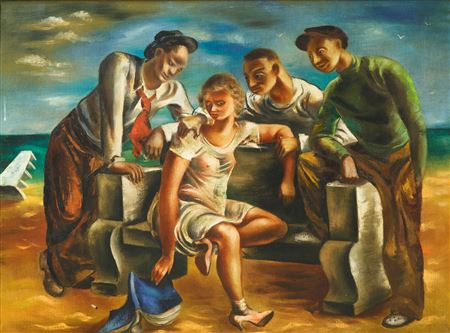
1905 Dayton, Ohio - 1985 Phoenix, Arizona. Known for: Figure, genre and portrait painting, sculpture.
Charles Campbell has been hailed as one of the more distinctive and imaginative contemporary American Painters of our time. In a highly individual style he combined rich vibrant colors with elaborate... Read full biography
Charles Campbell has been hailed as one of the more distinctive and imaginative contemporary American Painters of our time. In a highly individual style he combined rich vibrant colors with elaborate textures and composition. His paintings, described as modern by conservatives, and considered... Read full biography
Charles Campbell has been hailed as one of the more distinctive and imaginative contemporary American Painters of our time. In a highly individual style he combined rich vibrant colors with elaborate textures and composition. His paintings, described as modern by conservatives, and considered conservative by Avant-Garde groups, have their own unique balance of design. Charles was a quiet man who tended to make strong social statements in his paintings, some subtle, some obviously satirical,... Read full biography
Charles Campbell has been hailed as one of the more distinctive and imaginative contemporary American Painters of our time. In a highly individual style he combined rich vibrant colors with elaborate textures and composition. His paintings, described as modern by conservatives, and considered conservative by Avant-Garde groups, have their own unique balance of design. Charles was a quiet man who tended to make strong social statements in his paintings, some subtle, some obviously satirical, others full of fantasy and humor. A perfectionist, (he has destroyed over two-thirds of his work during his career), he painted every day until his eyes gave out and then often did some sculpting. His aim, he said, was to "Express my vision of the world... Read full biography
Charles Campbell has been hailed as one of the more distinctive and imaginative contemporary American Painters of our time. In a highly individual style he combined rich vibrant colors with elaborate textures and composition. His paintings, described as modern by conservatives, and considered conservative by Avant-Garde groups, have their own unique balance of design. Charles was a quiet man who tended to make strong social statements in his paintings, some subtle, some obviously satirical, others full of fantasy and humor. A perfectionist, (he has destroyed over two-thirds of his work during his career), he painted every day until his eyes gave out and then often did some sculpting. His aim, he said, was to "Express my vision of the world in the purest possible terms.". As a young man he drew inspiration from Daumier, particularly his outstanding draftsman... Read full biography
Charles Malcolm Campbell - Artist Info
About Charles Malcolm Campbell: Keywords
Keywords (28)
Art Method
- •Craftsperson, Handicrafts
- •Easel Painting
- •Sculpture, Three Dimensional Forms, Sculptor
Art Media
Art Style
- •Abstraction, Abstract
- •Modernist, Modernism (Partially Abstract, Leading Edge)
Art Subject
- •Figure, Figurative Humans
- •Genre, Human Activity, Daily Life
- •Portraits, Portraiture
Geography/Places Lived and/or Worked
- •California Before 1940
- •Texas Before 1940
Art School
- •California School of Fine Arts, San Francisco Art Institute, Student
- •Cleveland School of Art, Cleveland Institute of Art, Student
Chronology
- •Early 20th Century Before 1950
- •Late 20th Century After 1950
Added Description
- •Art Educator:Teaching, Scholarship, Workshops and/or Writing
- •Figure Specialty
- •Genre Specialty
- •Post Office Mural Painter, WPA Treasury Relief Art Project
- •WPA Artist, Federal Art Project, Murals and Easel Paintings
Exhibition of Museum
- •Art Institute of Chicago
- •Whitney Biennial Museum of American Art