Page loaded successfully. Showing keywords for Ferdinand Schirren.
Artist Keywords
Keywords page for Ferdinand Schirren ((1872 - 1944)), known for Figure, still life, genre painting, watercolor. Showing associated keywords and tags.
Ferdinand Schirren KEYWORDS
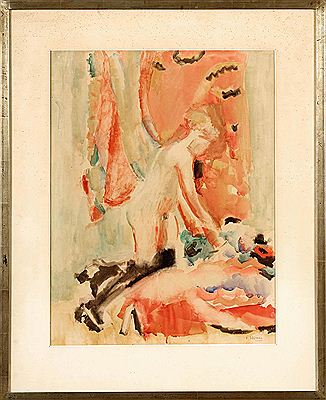
1872 Latvia - 1944. Known for: Figure, still life, genre painting, watercolor.
Born into a Jewish family in Riga (Latvia) in 1872, Ferdinand Schirren began trained under the leadership of Jef Lambeaux. He addressed painting at first with watercolor, when many young Belgian... Read full biography
Born into a Jewish family in Riga (Latvia) in 1872, Ferdinand Schirren began trained under the leadership of Jef Lambeaux. He addressed painting at first with watercolor, when many young Belgian artists were sensitive to the experiences of the Fauves. He simplified the forms and returned them with... Read full biography
Born into a Jewish family in Riga (Latvia) in 1872, Ferdinand Schirren began trained under the leadership of Jef Lambeaux. He addressed painting at first with watercolor, when many young Belgian artists were sensitive to the experiences of the Fauves. He simplified the forms and returned them with large areas of color. In the 1910s, his works made him one of the major representatives of the movement that would later be called the Brabant Fauvism alongside Rik Wouters.... Read full biography
Born into a Jewish family in Riga (Latvia) in 1872, Ferdinand Schirren began trained under the leadership of Jef Lambeaux. He addressed painting at first with watercolor, when many young Belgian artists were sensitive to the experiences of the Fauves. He simplified the forms and returned them with large areas of color. In the 1910s, his works made him one of the major representatives of the movement that would later be called the Brabant Fauvism alongside Rik Wouters.... Read full biography
Born into a Jewish family in Riga (Latvia) in 1872, Ferdinand Schirren began trained under the leadership of Jef Lambeaux. He addressed painting at first with watercolor, when many young Belgian artists were sensitive to the experiences of the Fauves. He simplified the forms and returned them with large areas of color. In the 1910s, his works made him one of the major representatives of the movement that would later be called the Brabant Fauvism alongside Rik Wouters.