Page loaded successfully. Showing keywords for Geza Szobel.
Artist Keywords
Keywords page for Geza Szobel ((1905 - 1963)), known for Abstract paintings. Showing associated keywords and tags.
Geza Szobel KEYWORDS
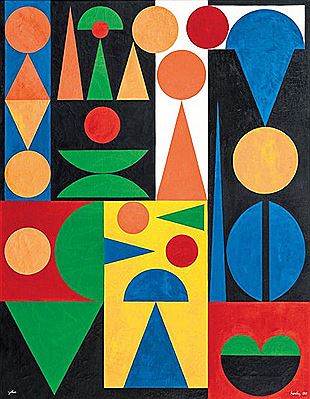
1905 - 1963. Known for: Abstract paintings.
Geza Szobel, a Hungarian artist, received a scholarship from the Budapest art school to study in Paris in 1934. In Paris, he befriended artists such as Ubac, Chagall, Mané Katz, and Le Corbusier.... Read full biography
Geza Szobel, a Hungarian artist, received a scholarship from the Budapest art school to study in Paris in 1934. In Paris, he befriended artists such as Ubac, Chagall, Mané Katz, and Le Corbusier. After the war, Szobel's artistic language and technique reached their peak, leading him to develop a... Read full biography
Geza Szobel, a Hungarian artist, received a scholarship from the Budapest art school to study in Paris in 1934. In Paris, he befriended artists such as Ubac, Chagall, Mané Katz, and Le Corbusier. After the war, Szobel's artistic language and technique reached their peak, leading him to develop a figuration style with geometric influences, balanced by the emotional depth of the subjects he portrayed in areas of outlined colors.... Read full biography
Geza Szobel, a Hungarian artist, received a scholarship from the Budapest art school to study in Paris in 1934. In Paris, he befriended artists such as Ubac, Chagall, Mané Katz, and Le Corbusier. After the war, Szobel's artistic language and technique reached their peak, leading him to develop a figuration style with geometric influences, balanced by the emotional depth of the subjects he portrayed in areas of outlined colors.... Read full biography
Geza Szobel, a Hungarian artist, received a scholarship from the Budapest art school to study in Paris in 1934. In Paris, he befriended artists such as Ubac, Chagall, Mané Katz, and Le Corbusier. After the war, Szobel's artistic language and technique reached their peak, leading him to develop a figuration style with geometric influences, balanced by the emotional depth of the subjects he portrayed in areas of outlined colors.