Page loaded successfully. Showing keywords for Gustave Van Vaerenbergh.
Artist Keywords
Keywords page for Gustave Van Vaerenbergh ((1873 - 1927)), known for Sculpture. Showing associated keywords and tags.
Gustave Van Vaerenbergh KEYWORDS
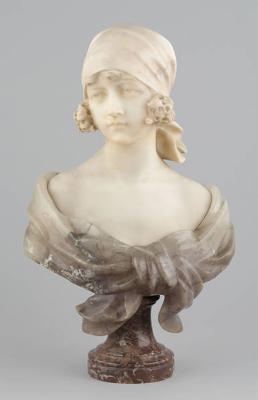
1873 - 1927. Known for: Sculpture.
Lots Sold: 70%, High Price: Subscribe.
Gustave Van Vaerenbergh (1873-1927) . A sculptor, he became well known for his female busts in early art nouveau style. The biggest part of his oeuvre are busts of females, made in plaster (of... Read full biography
Gustave Van Vaerenbergh (1873-1927) . A sculptor, he became well known for his female busts in early art nouveau style. The biggest part of his oeuvre are busts of females, made in plaster (of Paris), marble, bronze, alabaster, regulé (a zinc-alloy), terracotta and some in the costly "technique... Read full biography
Gustave Van Vaerenbergh (1873-1927) . A sculptor, he became well known for his female busts in early art nouveau style. The biggest part of his oeuvre are busts of females, made in plaster (of Paris), marble, bronze, alabaster, regulé (a zinc-alloy), terracotta and some in the costly "technique chryséléphantine" . A workshop ( Carli & frères ) with up to 20 persons were working for him, producing sculptures signed with his signature "G. Van Vaerenbergh" or "G. V. Vaerenbergh". The letter "G" of... Read full biography
Gustave Van Vaerenbergh (1873-1927) . A sculptor, he became well known for his female busts in early art nouveau style. The biggest part of his oeuvre are busts of females, made in plaster (of Paris), marble, bronze, alabaster, regulé (a zinc-alloy), terracotta and some in the costly "technique chryséléphantine" . A workshop ( Carli & frères ) with up to 20 persons were working for him, producing sculptures signed with his signature "G. Van Vaerenbergh" or "G. V. Vaerenbergh". The letter "G" of his signature is often interpreted as "Georges" but it stands for "Gustave" (birth certificate). Sources include:. www.haberey.de
Gustave Van Vaerenbergh (1873-1927) . A sculptor, he became well known for his female busts in early art nouveau style. The biggest part of his oeuvre are busts of females, made in plaster (of Paris), marble, bronze, alabaster, regulé (a zinc-alloy), terracotta and some in the costly "technique chryséléphantine" . A workshop ( Carli & frères ) with up to 20 persons were working for him, producing sculptures signed with his signature "G. Van Vaerenbergh" or "G. V. Vaerenbergh". The letter "G" of his signature is often interpreted as "Georges" but it stands for "Gustave" (birth certificate). Sources include:. www.haberey.de