Page loaded successfully. Showing keywords for Gyula Czimra.
Artist Keywords
Keywords page for Gyula Czimra ((1901 - 1966)), known for Artwork style - Technical draftsman, industrial and human life subjects. Showing associated keywords and tags.
Gyula Czimra KEYWORDS
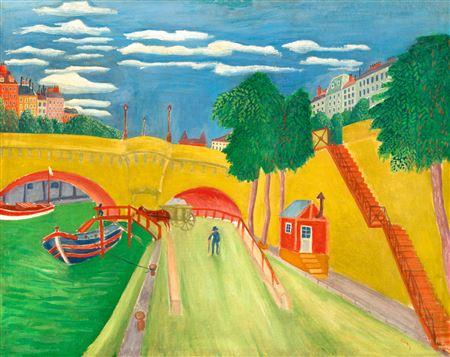
1901 - 1966. Known for: Artwork style - Technical draftsman, industrial and human life subjects.
Gyula Czimra was a technical draftsman who attended evening courses at the School of Applied Arts. He studied under Lucien Simon in Paris and worked with Jeno Paizs Goebel in Barbizon. Czimra worked... Read full biography
Gyula Czimra was a technical draftsman who attended evening courses at the School of Applied Arts. He studied under Lucien Simon in Paris and worked with Jeno Paizs Goebel in Barbizon. Czimra worked in Nagybánya from 1928 and in the Szentendre artist colony from 1929. He later lived in Rákoshegy... Read full biography
Gyula Czimra was a technical draftsman who attended evening courses at the School of Applied Arts. He studied under Lucien Simon in Paris and worked with Jeno Paizs Goebel in Barbizon. Czimra worked in Nagybánya from 1928 and in the Szentendre artist colony from 1929. He later lived in Rákoshegy from 1933, finding inspiration in the man-made industrial environment and the intimate sphere of human life for his artwork.
Gyula Czimra was a technical draftsman who attended evening courses at the School of Applied Arts. He studied under Lucien Simon in Paris and worked with Jeno Paizs Goebel in Barbizon. Czimra worked in Nagybánya from 1928 and in the Szentendre artist colony from 1929. He later lived in Rákoshegy from 1933, finding inspiration in the man-made industrial environment and the intimate sphere of human life for his artwork.
Gyula Czimra was a technical draftsman who attended evening courses at the School of Applied Arts. He studied under Lucien Simon in Paris and worked with Jeno Paizs Goebel in Barbizon. Czimra worked in Nagybánya from 1928 and in the Szentendre artist colony from 1929. He later lived in Rákoshegy from 1933, finding inspiration in the man-made industrial environment and the intimate sphere of human life for his artwork.