Page loaded successfully. Showing keywords for Jaroslav Kral.
Artist Keywords
Keywords page for Jaroslav Kral ((1883 - 1942)), known for Lyrical cubism, still lifes with reduced flatness of colors. Showing associated keywords and tags.
Jaroslav Kral KEYWORDS
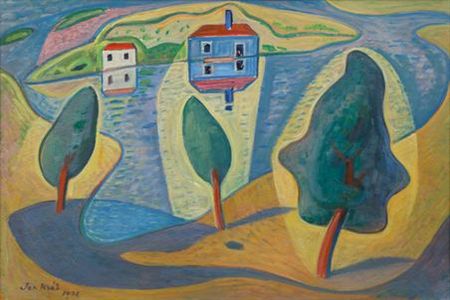
1883 - 1942. Known for: Lyrical cubism, still lifes with reduced flatness of colors.
Jaroslav Kral was an artist from the Czech Republic who emerged from post-war synthetic cubism and later found his authentic expression in lyrical cubism. Influenced by artists like Emil Filla and... Read full biography
Jaroslav Kral was an artist from the Czech Republic who emerged from post-war synthetic cubism and later found his authentic expression in lyrical cubism. Influenced by artists like Emil Filla and František Muzika, he incorporated motifs of female figures with spicass-tuned morphology into his... Read full biography
Jaroslav Kral was an artist from the Czech Republic who emerged from post-war synthetic cubism and later found his authentic expression in lyrical cubism. Influenced by artists like Emil Filla and František Muzika, he incorporated motifs of female figures with spicass-tuned morphology into his work. In the early 1930s, he explored abstraction in his still lifes, focusing on a reduced flatness of colors under the influence of František Foltýn.
Jaroslav Kral was an artist from the Czech Republic who emerged from post-war synthetic cubism and later found his authentic expression in lyrical cubism. Influenced by artists like Emil Filla and František Muzika, he incorporated motifs of female figures with spicass-tuned morphology into his work. In the early 1930s, he explored abstraction in his still lifes, focusing on a reduced flatness of colors under the influence of František Foltýn.
Jaroslav Kral was an artist from the Czech Republic who emerged from post-war synthetic cubism and later found his authentic expression in lyrical cubism. Influenced by artists like Emil Filla and František Muzika, he incorporated motifs of female figures with spicass-tuned morphology into his work. In the early 1930s, he explored abstraction in his still lifes, focusing on a reduced flatness of colors under the influence of František Foltýn.