Page loaded successfully. Showing keywords for Johann Friedrich Weitsch.
Artist Keywords
Keywords page for Johann Friedrich Weitsch ((1723 - 1803)), known for Landscape and animal painting. Showing associated keywords and tags.
Johann Friedrich Weitsch KEYWORDS
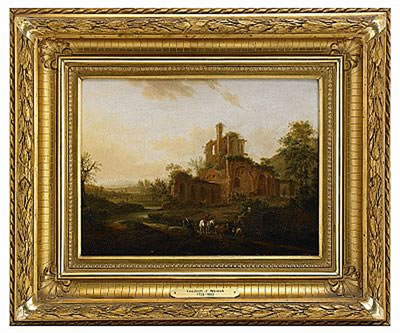
1723 - 1803. Known for: Landscape and animal painting.
Pascha Johann Friedrich Weitsch, whose first name is often used as an alias, was originally a soldier before beginning his career as an artist. He first painted for the Fürstenberg porcelain... Read full biography
Pascha Johann Friedrich Weitsch, whose first name is often used as an alias, was originally a soldier before beginning his career as an artist. He first painted for the Fürstenberg porcelain manufacturer, then for the Stobwasser lacquer manufacturer in Brunswick, and was also curator of the Ducal... Read full biography
Pascha Johann Friedrich Weitsch, whose first name is often used as an alias, was originally a soldier before beginning his career as an artist. He first painted for the Fürstenberg porcelain manufacturer, then for the Stobwasser lacquer manufacturer in Brunswick, and was also curator of the Ducal gallery in Salzdahlum Palace. His landscapes and animal paintings are heavily influenced by the Dutch school, whose characteristics he brought back to his home in Brunswick.
Pascha Johann Friedrich Weitsch, whose first name is often used as an alias, was originally a soldier before beginning his career as an artist. He first painted for the Fürstenberg porcelain manufacturer, then for the Stobwasser lacquer manufacturer in Brunswick, and was also curator of the Ducal gallery in Salzdahlum Palace. His landscapes and animal paintings are heavily influenced by the Dutch school, whose characteristics he brought back to his home in Brunswick.
Pascha Johann Friedrich Weitsch, whose first name is often used as an alias, was originally a soldier before beginning his career as an artist. He first painted for the Fürstenberg porcelain manufacturer, then for the Stobwasser lacquer manufacturer in Brunswick, and was also curator of the Ducal gallery in Salzdahlum Palace. His landscapes and animal paintings are heavily influenced by the Dutch school, whose characteristics he brought back to his home in Brunswick.