Page loaded successfully. Showing keywords for Joseph I Zucker.
Artist Keywords
Keywords page for Joseph I Zucker ((1941 - 2024)), known for Collage, abstract genre, still life, variety of materials, cotton, wood, squeegies. Showing associated keywords and tags.
Joseph I Zucker KEYWORDS
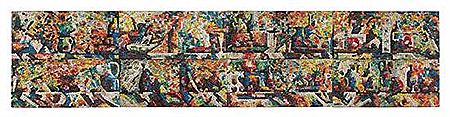
1941 Chicago, Illinois - 2024 East Hampton, New York. Known for: Collage, abstract genre, still life, variety of materials, cotton, wood, squeegies.
Joseph Zucker studied at the Art Institute of Chicago, where he received a MFA in 1966. He now lives and works in New York City. Zucker's "woven" paintings of the 1960's explored the relationship... Read full biography
Joseph Zucker studied at the Art Institute of Chicago, where he received a MFA in 1966. He now lives and works in New York City. Zucker's "woven" paintings of the 1960's explored the relationship between the subject of the painting and the structure of the canvas on which it was painted. Zucker... Read full biography
Joseph Zucker studied at the Art Institute of Chicago, where he received a MFA in 1966. He now lives and works in New York City. Zucker's "woven" paintings of the 1960's explored the relationship between the subject of the painting and the structure of the canvas on which it was painted. Zucker became quite well-known for his cotton ball paintings, he began these in the early 1970's. He began to use cotton balls as paint, by coloring, stretching, and placing them onto a stretched canvas. On one... Read full biography
Joseph Zucker studied at the Art Institute of Chicago, where he received a MFA in 1966. He now lives and works in New York City. Zucker's "woven" paintings of the 1960's explored the relationship between the subject of the painting and the structure of the canvas on which it was painted. Zucker became quite well-known for his cotton ball paintings, he began these in the early 1970's. He began to use cotton balls as paint, by coloring, stretching, and placing them onto a stretched canvas. On one level they were a "literal reference to the nature of the cotton canvas itself." They were also a part of the larger interest among artists in the 1970's with the relationship between art and mass-produced goods and technology. In the 1980s Zucker... Read full biography
Joseph Zucker studied at the Art Institute of Chicago, where he received a MFA in 1966. He now lives and works in New York City. Zucker's "woven" paintings of the 1960's explored the relationship between the subject of the painting and the structure of the canvas on which it was painted. Zucker became quite well-known for his cotton ball paintings, he began these in the early 1970's. He began to use cotton balls as paint, by coloring, stretching, and placing them onto a stretched canvas. On one level they were a "literal reference to the nature of the cotton canvas itself." They were also a part of the larger interest among artists in the 1970's with the relationship between art and mass-produced goods and technology. In the 1980s Zucker created rope-grid paintings, wherein he laid colored rope onto canvas in a grid formation and then created rope rectangles cartoon... Read full biography
Joseph I Zucker - Artist Info
About Joseph I Zucker: Keywords
Keywords (26)
Art Method
- •Collage and/or Decoupage
- •Easel Painting
- •Graphic Design, Printmaking, Lithography, Etching, Woodblocks
- •Murals: Design, Painting, Fresco, Mosaic, Glass
- •Sculpture, Three Dimensional Forms, Sculptor
Art Media
- •Acrylic Paint
- •Etching, Etcher
- •Found Objects, Junk, Recycles
- •Ink
- •Magic Marker, Sharpie, Felt-Tip Pen
- •Mixed Media, Multi Media and/or Multli Styles
- •Oil Paint
- •Pen and Ink Drawing
- •Watercolor/Watercolour
Art Style
Art Subject
- •Animals, Mammals
- •Genre, Human Activity, Daily Life
- •Landscape, Nature, Rural Scene
- •Seascapes, Seasides
- •Sports Figures, Athletes, Genre, Events
- •Still Life
Art School
- •School of the Art Institute of Chicago, Student
Chronology
- •Late 20th Century After 1950
Added Description
- •Abstraction Specialty
- •Genre Specialty
Exhibition of Museum
- •Whitney Biennial Museum of American Art