Page loaded successfully. Showing keywords for Kaapa Mbitjana Tjampitjinpa.
Artist Keywords
Keywords page for Kaapa Mbitjana Tjampitjinpa ((1925 - 1989)), known for Modernist aboriginal painting. Showing associated keywords and tags.
Kaapa Mbitjana Tjampitjinpa KEYWORDS
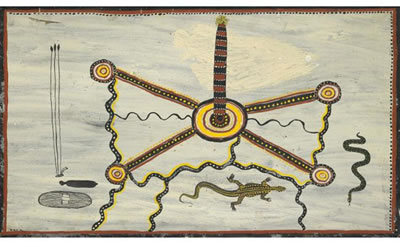
1925 - 1989. Known for: Modernist aboriginal painting.
Kaapa Tjampitjinpa learned to paint with watercolor, in the style of Albert Namatjira, but was not satisfied with the constraints of representational landscape painting. Remarkably, when employed as... Read full biography
Kaapa Tjampitjinpa learned to paint with watercolor, in the style of Albert Namatjira, but was not satisfied with the constraints of representational landscape painting. Remarkably, when employed as yardman at the Papunya School, Kaapa conceived a radical new way of describing the ceremonies of... Read full biography
Kaapa Tjampitjinpa learned to paint with watercolor, in the style of Albert Namatjira, but was not satisfied with the constraints of representational landscape painting. Remarkably, when employed as yardman at the Papunya School, Kaapa conceived a radical new way of describing the ceremonies of celebration for his country. Evidence suggests that Kaapa's first experimental works were created before Geoffrey Bardon arrived as a fresh-faced art teacher. (1) And Kaapa remained a driving force in... Read full biography
Kaapa Tjampitjinpa learned to paint with watercolor, in the style of Albert Namatjira, but was not satisfied with the constraints of representational landscape painting. Remarkably, when employed as yardman at the Papunya School, Kaapa conceived a radical new way of describing the ceremonies of celebration for his country. Evidence suggests that Kaapa's first experimental works were created before Geoffrey Bardon arrived as a fresh-faced art teacher. (1) And Kaapa remained a driving force in the critical early years of contemporary Aboriginal art, becoming the first Chairman of Papunya Tula Artists. (2) . Kaapa's paintings developed at a rapid pace during 1971; shifting from scrupulous representations of ceremony, that included figures and... Read full biography
Kaapa Tjampitjinpa learned to paint with watercolor, in the style of Albert Namatjira, but was not satisfied with the constraints of representational landscape painting. Remarkably, when employed as yardman at the Papunya School, Kaapa conceived a radical new way of describing the ceremonies of celebration for his country. Evidence suggests that Kaapa's first experimental works were created before Geoffrey Bardon arrived as a fresh-faced art teacher. (1) And Kaapa remained a driving force in the critical early years of contemporary Aboriginal art, becoming the first Chairman of Papunya Tula Artists. (2) . Kaapa's paintings developed at a rapid pace during 1971; shifting from scrupulous representations of ceremony, that included figures and ritual paraphernalia set in 'perspectival' space, such as is the award winning Men's Ceremony for the Kangaroo... Read full biography