Page loaded successfully. Showing keywords for Kerstiaen Keuninck.
Artist Keywords
Keywords page for Kerstiaen Keuninck ((1560 - 1635)), known for Painting. Showing associated keywords and tags.
Kerstiaen Keuninck KEYWORDS
1560 - 1635. Known for: Painting.
The Fleming Kerstiaen de Keuninck, first mentioned in Antwerp in 1577, became Master of the Guild of St. Luke in 1580/81. His oeuvre is manageable; today we know of around 60 mostly unsigned... Read full biography
The Fleming Kerstiaen de Keuninck, first mentioned in Antwerp in 1577, became Master of the Guild of St. Luke in 1580/81. His oeuvre is manageable; today we know of around 60 mostly unsigned paintings; his specialties included wildly romantic forest landscapes, enlivened with staffage figures, as... Read full biography
The Fleming Kerstiaen de Keuninck, first mentioned in Antwerp in 1577, became Master of the Guild of St. Luke in 1580/81. His oeuvre is manageable; today we know of around 60 mostly unsigned paintings; his specialties included wildly romantic forest landscapes, enlivened with staffage figures, as well as colorful depictions of conflagrations. There is a stylistic affinity with Gillis van Coninxloo (around 1581-1619/20), who lived in Frankenthal from 1587-1595. His works can be found in several... Read full biography
The Fleming Kerstiaen de Keuninck, first mentioned in Antwerp in 1577, became Master of the Guild of St. Luke in 1580/81. His oeuvre is manageable; today we know of around 60 mostly unsigned paintings; his specialties included wildly romantic forest landscapes, enlivened with staffage figures, as well as colorful depictions of conflagrations. There is a stylistic affinity with Gillis van Coninxloo (around 1581-1619/20), who lived in Frankenthal from 1587-1595. His works can be found in several public collections, such as the Kunsthalle Karlsruhe, the Kunstmuseum Westfalen-Lippe and the Metropolian Museum.
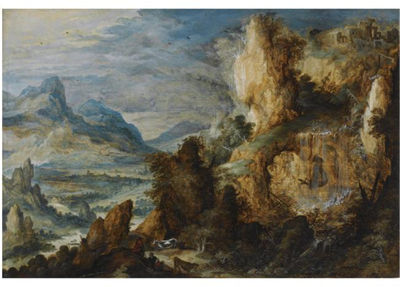
The Fleming Kerstiaen de Keuninck, first mentioned in Antwerp in 1577, became Master of the Guild of St. Luke in 1580/81. His oeuvre is manageable; today we know of around 60 mostly unsigned paintings; his specialties included wildly romantic forest landscapes, enlivened with staffage figures, as well as colorful depictions of conflagrations. There is a stylistic affinity with Gillis van Coninxloo (around 1581-1619/20), who lived in Frankenthal from 1587-1595. His works can be found in several public collections, such as the Kunsthalle Karlsruhe, the Kunstmuseum Westfalen-Lippe and the Metropolian Museum.