Page loaded successfully. Showing keywords for Otto Dunkelsbuhler.
Artist Keywords
Keywords page for Otto Dunkelsbuhler ((1898 - 1977)), known for Painting. Showing associated keywords and tags.
Otto Dunkelsbuhler KEYWORDS
1898 - 1977. Known for: Painting.
Dünkelsbühler studied at the art academies in Munich and Berlin, among others as a student of Emil Orlik. His art exhibits both impressionist and cubist style elements. Otto Dünkelsbühler not only... Read full biography
Dünkelsbühler studied at the art academies in Munich and Berlin, among others as a student of Emil Orlik. His art exhibits both impressionist and cubist style elements. Otto Dünkelsbühler not only experienced both world wars, he was also granted a ban on painting and exhibiting when the National... Read full biography
Dünkelsbühler studied at the art academies in Munich and Berlin, among others as a student of Emil Orlik. His art exhibits both impressionist and cubist style elements. Otto Dünkelsbühler not only experienced both world wars, he was also granted a ban on painting and exhibiting when the National Socialists came to power, which is why he belongs to the so-called "lost generation" of painters. After studying art with Julius Diez and Willi Geiger, he moved to the arts and crafts school in Berlin... Read full biography
Dünkelsbühler studied at the art academies in Munich and Berlin, among others as a student of Emil Orlik. His art exhibits both impressionist and cubist style elements. Otto Dünkelsbühler not only experienced both world wars, he was also granted a ban on painting and exhibiting when the National Socialists came to power, which is why he belongs to the so-called "lost generation" of painters. After studying art with Julius Diez and Willi Geiger, he moved to the arts and crafts school in Berlin to Emil Orlik and Cesar Klein. The present painting was created in 1957, when the artist undertook extensive painting journeys in Germany, France, Spain and the Aegean, but did not take part in any exhibition. The "expressive realism" is also evident... Read full biography
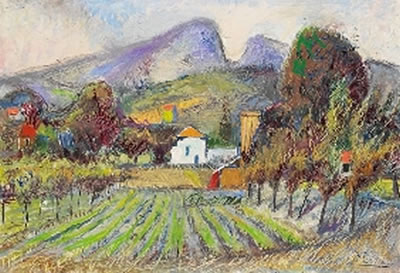
Dünkelsbühler studied at the art academies in Munich and Berlin, among others as a student of Emil Orlik. His art exhibits both impressionist and cubist style elements. Otto Dünkelsbühler not only experienced both world wars, he was also granted a ban on painting and exhibiting when the National Socialists came to power, which is why he belongs to the so-called "lost generation" of painters. After studying art with Julius Diez and Willi Geiger, he moved to the arts and crafts school in Berlin to Emil Orlik and Cesar Klein. The present painting was created in 1957, when the artist undertook extensive painting journeys in Germany, France, Spain and the Aegean, but did not take part in any exhibition. The "expressive realism" is also evident here in his late work, especially through the choice of bright and strong colors and the stained brushstroke.