Page loaded successfully. Showing keywords for Tsuyoshi Maekawa.
Artist Keywords
Keywords page for Tsuyoshi Maekawa ((Born 1936)), known for Painting. Showing associated keywords and tags.
Tsuyoshi Maekawa KEYWORDS
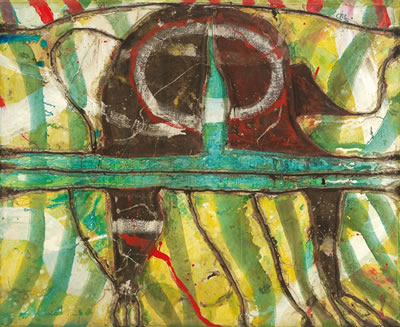
Born 1936 Osaka, Japan. Known for: Painting.
Born in Osaka in 1936, Tsuyoshi Maekawa is the representative figure from Gutai's second generation. In 1962, he joined the Gutai Art Association, where he was an young active member. Breaking free... Read full biography
Born in Osaka in 1936, Tsuyoshi Maekawa is the representative figure from Gutai's second generation. In 1962, he joined the Gutai Art Association, where he was an young active member. Breaking free from the conventional brushwork, he cuts and rips materials like burlap into pieces and sews them... Read full biography
Born in Osaka in 1936, Tsuyoshi Maekawa is the representative figure from Gutai's second generation. In 1962, he joined the Gutai Art Association, where he was an young active member. Breaking free from the conventional brushwork, he cuts and rips materials like burlap into pieces and sews them back together into eccentric concoctions, spicing up the Gutai movement and its ontological exploration. His works are held in collections at the Museum of Contemporary Art in Tokyo, Osaka City Museum of... Read full biography
Born in Osaka in 1936, Tsuyoshi Maekawa is the representative figure from Gutai's second generation. In 1962, he joined the Gutai Art Association, where he was an young active member. Breaking free from the conventional brushwork, he cuts and rips materials like burlap into pieces and sews them back together into eccentric concoctions, spicing up the Gutai movement and its ontological exploration. His works are held in collections at the Museum of Contemporary Art in Tokyo, Osaka City Museum of Fine Arts and Tate Modern in London.
Born in Osaka in 1936, Tsuyoshi Maekawa is the representative figure from Gutai's second generation. In 1962, he joined the Gutai Art Association, where he was an young active member. Breaking free from the conventional brushwork, he cuts and rips materials like burlap into pieces and sews them back together into eccentric concoctions, spicing up the Gutai movement and its ontological exploration. His works are held in collections at the Museum of Contemporary Art in Tokyo, Osaka City Museum of Fine Arts and Tate Modern in London.