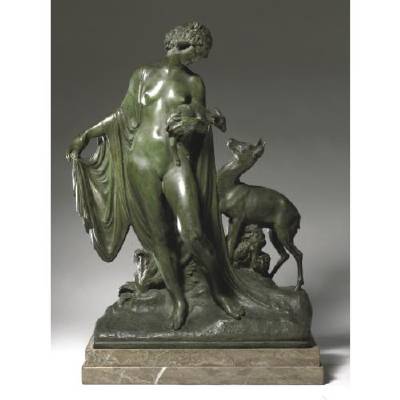
Albin Polasek was a 20th-century sculptor, working in a variety of mediums including stone, bronze, plaster and wood. He also did occasional painting. Polasek's legacy is the sculpture he created,... Read full biography
Albin Polasek was a 20th-century sculptor, working in a variety of mediums including stone, bronze, plaster and wood. He also did occasional painting. Polasek's legacy is the sculpture he created, primarily figurative works with which he strove for sound construction and reflection of the true... Read full biography
Albin Polasek was a 20th-century sculptor, working in a variety of mediums including stone, bronze, plaster and wood. He also did occasional painting. Polasek's legacy is the sculpture he created, primarily figurative works with which he strove for sound construction and reflection of the true structure of nature such as the unity of head or figure and the beauty of "movement" - the flow of one mass into another - which made the difference between a "living" work and something inanimate.... Read full biography
Albin Polasek was a 20th-century sculptor, working in a variety of mediums including stone, bronze, plaster and wood. He also did occasional painting. Polasek's legacy is the sculpture he created, primarily figurative works with which he strove for sound construction and reflection of the true structure of nature such as the unity of head or figure and the beauty of "movement" - the flow of one mass into another - which made the difference between a "living" work and something inanimate. Polasek was born in 1879 in Frenstat, Moravia (now Czech Republic) and was apprenticed as a wood carver in Vienna before immigrating to the United States in 1901. He continued to work as a wood carver in the American Midwest until 1906, when he began... Read full biography
Albin Polasek was a 20th-century sculptor, working in a variety of mediums including stone, bronze, plaster and wood. He also did occasional painting. Polasek's legacy is the sculpture he created, primarily figurative works with which he strove for sound construction and reflection of the true structure of nature such as the unity of head or figure and the beauty of "movement" - the flow of one mass into another - which made the difference between a "living" work and something inanimate. Polasek was born in 1879 in Frenstat, Moravia (now Czech Republic) and was apprenticed as a wood carver in Vienna before immigrating to the United States in 1901. He continued to work as a wood carver in the American Midwest until 1906, when he began formal art studies at the Pennsylvania Academy of the Fine Arts. Under Charles Grafly, Polasek learned traditional classical sculpting techn... Read full biography