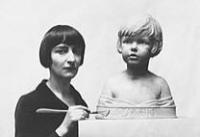
Sculptor Brenda Putnam was born in Minneapolis, Minnesota in 1890. She established a studio in New York City in 1910. After a period of success in a detailed, conventional representational style from... Read full biography
Sculptor Brenda Putnam was born in Minneapolis, Minnesota in 1890. She established a studio in New York City in 1910. After a period of success in a detailed, conventional representational style from that time until around 1925 with portraits, animals and cherubs on garden fountains, Putnam became... Read full biography
Sculptor Brenda Putnam was born in Minneapolis, Minnesota in 1890. She established a studio in New York City in 1910. After a period of success in a detailed, conventional representational style from that time until around 1925 with portraits, animals and cherubs on garden fountains, Putnam became dissatisfied with her work. She traveled to Florence, Italy, no doubt to recharge her inspiration at the source of great Renaissance sculpture. She also wished to pursue her interest in the more... Read full biography
Sculptor Brenda Putnam was born in Minneapolis, Minnesota in 1890. She established a studio in New York City in 1910. After a period of success in a detailed, conventional representational style from that time until around 1925 with portraits, animals and cherubs on garden fountains, Putnam became dissatisfied with her work. She traveled to Florence, Italy, no doubt to recharge her inspiration at the source of great Renaissance sculpture. She also wished to pursue her interest in the more modern simplicity of the emerging Art Deco style, combined with timeless sculptural values, through work with Libero Andreotti. The work and ideas of Cubist sculptor Alexander Archipenko also apparently refreshed her thinking. Putnam's sculpture may be... Read full biography
Sculptor Brenda Putnam was born in Minneapolis, Minnesota in 1890. She established a studio in New York City in 1910. After a period of success in a detailed, conventional representational style from that time until around 1925 with portraits, animals and cherubs on garden fountains, Putnam became dissatisfied with her work. She traveled to Florence, Italy, no doubt to recharge her inspiration at the source of great Renaissance sculpture. She also wished to pursue her interest in the more modern simplicity of the emerging Art Deco style, combined with timeless sculptural values, through work with Libero Andreotti. The work and ideas of Cubist sculptor Alexander Archipenko also apparently refreshed her thinking. Putnam's sculpture may be found in the collections of the Dallas Museum of Art, Texas; Brookgreen Gardens, South Carolina; and four Washington, D.C. venues, the United Stat... Read full biography