Charles Bergman. Charles Bergman enjoyed duck hunting and it may be possible that, while it was legal, he sold some of his excess game in the Portland (OR) markets. There were few, if any, locally... Read full biography
Charles Bergman. Charles Bergman enjoyed duck hunting and it may be possible that, while it was legal, he sold some of his excess game in the Portland (OR) markets. There were few, if any, locally produced decoys at the time so Bergman's earliest decoys were Mason factory birds. His first attempts... Read full biography
Charles Bergman. Charles Bergman enjoyed duck hunting and it may be possible that, while it was legal, he sold some of his excess game in the Portland (OR) markets. There were few, if any, locally produced decoys at the time so Bergman's earliest decoys were Mason factory birds. His first attempts at making his own decoys clearly reflect the Mason influence but he rapidly developed a unique style of his own. Citing Miller and Mortensen, all of Bergman's decoys are hollow and very light. All... Read full biography
Charles Bergman. Charles Bergman enjoyed duck hunting and it may be possible that, while it was legal, he sold some of his excess game in the Portland (OR) markets. There were few, if any, locally produced decoys at the time so Bergman's earliest decoys were Mason factory birds. His first attempts at making his own decoys clearly reflect the Mason influence but he rapidly developed a unique style of his own. Citing Miller and Mortensen, all of Bergman's decoys are hollow and very light. All were carved from the locally available western red cedar. Until about the age of 70, the bulk of Bergman's production was for his own use but, upon his retirement, he began to carve in earnest for the commercial trade. His grandson estimates that he... Read full biography
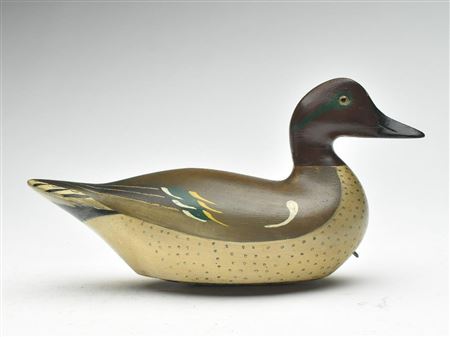
Charles Bergman. Charles Bergman enjoyed duck hunting and it may be possible that, while it was legal, he sold some of his excess game in the Portland (OR) markets. There were few, if any, locally produced decoys at the time so Bergman's earliest decoys were Mason factory birds. His first attempts at making his own decoys clearly reflect the Mason influence but he rapidly developed a unique style of his own. Citing Miller and Mortensen, all of Bergman's decoys are hollow and very light. All were carved from the locally available western red cedar. Until about the age of 70, the bulk of Bergman's production was for his own use but, upon his retirement, he began to carve in earnest for the commercial trade. His grandson estimates that he produced about a dozen decoys per week that he sold for $1.25 each. He carved a variety of species, all noted for their table q... Read full biography
Charles Magnus Bergman - Artist Info
About Charles Magnus Bergman: Museums & Collections