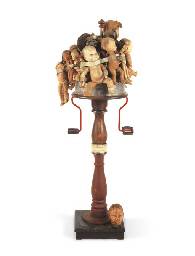
A gallery operator turned artist, Edward Kienholz became one of the leading figures associated with the radical movement on the West Coast and was identified with Popular Culture or Pop Art. He used... Read full biography
A gallery operator turned artist, Edward Kienholz became one of the leading figures associated with the radical movement on the West Coast and was identified with Popular Culture or Pop Art. He used common everyday objects in has assemblages and full-scale environments to jar public awareness of... Read full biography
A gallery operator turned artist, Edward Kienholz became one of the leading figures associated with the radical movement on the West Coast and was identified with Popular Culture or Pop Art. He used common everyday objects in has assemblages and full-scale environments to jar public awareness of social issues that people like to avoid. However, unlike most pop artists, his imagery was not the conventional items of popular culture but was junk--raw, discarded, highly personal items that he found... Read full biography
A gallery operator turned artist, Edward Kienholz became one of the leading figures associated with the radical movement on the West Coast and was identified with Popular Culture or Pop Art. He used common everyday objects in has assemblages and full-scale environments to jar public awareness of social issues that people like to avoid. However, unlike most pop artists, his imagery was not the conventional items of popular culture but was junk--raw, discarded, highly personal items that he found at swap meets, garage sales and in dumpsters. This element of chance effect also aligned him with the Dada movement. He was born in 1927 on a farm in Fairfield, Washington, and had little higher education except for a few semesters of college. A... Read full biography
A gallery operator turned artist, Edward Kienholz became one of the leading figures associated with the radical movement on the West Coast and was identified with Popular Culture or Pop Art. He used common everyday objects in has assemblages and full-scale environments to jar public awareness of social issues that people like to avoid. However, unlike most pop artists, his imagery was not the conventional items of popular culture but was junk--raw, discarded, highly personal items that he found at swap meets, garage sales and in dumpsters. This element of chance effect also aligned him with the Dada movement. He was born in 1927 on a farm in Fairfield, Washington, and had little higher education except for a few semesters of college. A Rembrandt exhibit in Minneapolis inspired him to be an artist as did Tom Lea, an older muralist and painter whom he came to know while livi... Read full biography