Gert Wollheim had spent World War II in France, interned and underground. After the war, he stayed in Paris for another two years before moving to New York in 1947. On the other side of the Atlantic,... Read full biography
Gert Wollheim had spent World War II in France, interned and underground. After the war, he stayed in Paris for another two years before moving to New York in 1947. On the other side of the Atlantic, a fantastically surreal imagery developed in which a specific aspect of the Old Masters seems to be... Read full biography
Gert Wollheim had spent World War II in France, interned and underground. After the war, he stayed in Paris for another two years before moving to New York in 1947. On the other side of the Atlantic, a fantastically surreal imagery developed in which a specific aspect of the Old Masters seems to be increasingly inherent. Wollheim remains true to himself in the furious, bizarre poetry of his pictorial content. A flickering portrayal of card-playing circus people opens the view into an... Read full biography
Gert Wollheim had spent World War II in France, interned and underground. After the war, he stayed in Paris for another two years before moving to New York in 1947. On the other side of the Atlantic, a fantastically surreal imagery developed in which a specific aspect of the Old Masters seems to be increasingly inherent. Wollheim remains true to himself in the furious, bizarre poetry of his pictorial content. A flickering portrayal of card-playing circus people opens the view into an alternative world, marked by play, magic and exoticism contrasting a modernity shaped by the distant idea of progress, which had only just survived the horrors of the Second World War. The circus was an attractive subject for Wollheim not least because of the... Read full biography
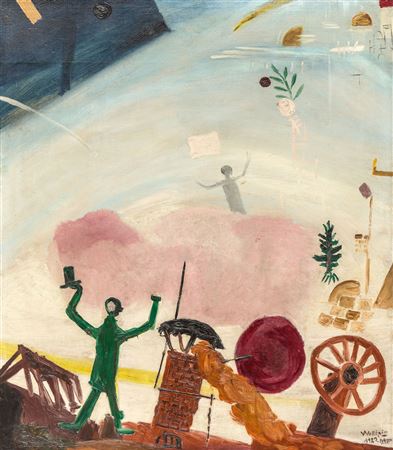
Gert Wollheim had spent World War II in France, interned and underground. After the war, he stayed in Paris for another two years before moving to New York in 1947. On the other side of the Atlantic, a fantastically surreal imagery developed in which a specific aspect of the Old Masters seems to be increasingly inherent. Wollheim remains true to himself in the furious, bizarre poetry of his pictorial content. A flickering portrayal of card-playing circus people opens the view into an alternative world, marked by play, magic and exoticism contrasting a modernity shaped by the distant idea of progress, which had only just survived the horrors of the Second World War. The circus was an attractive subject for Wollheim not least because of the theatrical qualities of his protagonists, which he skillfully addresses in his painting wit... Read full biography
Gert Heinrich Wollheim - Artist Info
About Gert Heinrich Wollheim: Museums & Collections