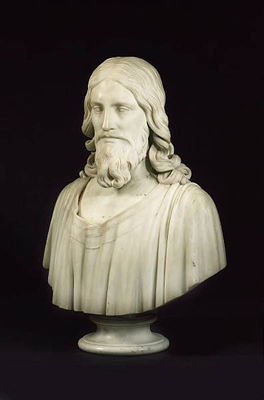
A preeminent Neo-Classical* American sculptor of the nineteenth century, Hiram Powers was a carver in marble* of figures including many subjects from Greek mythology. According to one source, his... Read full biography
A preeminent Neo-Classical* American sculptor of the nineteenth century, Hiram Powers was a carver in marble* of figures including many subjects from Greek mythology. According to one source, his work, Prosperone, became "the most favored single piece among Powers' work, and it was copied more... Read full biography
A preeminent Neo-Classical* American sculptor of the nineteenth century, Hiram Powers was a carver in marble* of figures including many subjects from Greek mythology. According to one source, his work, Prosperone, became "the most favored single piece among Powers' work, and it was copied more times than any other work ever produced by an American sculptor" (Christie's New York, 12/2/1988). His sculpture, Greek Slave, was "the best known work of the mid century". (Samuels, 379). Born on a... Read full biography
A preeminent Neo-Classical* American sculptor of the nineteenth century, Hiram Powers was a carver in marble* of figures including many subjects from Greek mythology. According to one source, his work, Prosperone, became "the most favored single piece among Powers' work, and it was copied more times than any other work ever produced by an American sculptor" (Christie's New York, 12/2/1988). His sculpture, Greek Slave, was "the best known work of the mid century". (Samuels, 379). Born on a poverty-stricken farm in Vermont, near Woodstock, in 1805, Powers had humble beginnings, being the eighth of nine children. His family moved to Cincinnati where from the ages of 17 to 23, he held jobs in the Luman Watson clock and organ factory, and he... Read full biography
A preeminent Neo-Classical* American sculptor of the nineteenth century, Hiram Powers was a carver in marble* of figures including many subjects from Greek mythology. According to one source, his work, Prosperone, became "the most favored single piece among Powers' work, and it was copied more times than any other work ever produced by an American sculptor" (Christie's New York, 12/2/1988). His sculpture, Greek Slave, was "the best known work of the mid century". (Samuels, 379). Born on a poverty-stricken farm in Vermont, near Woodstock, in 1805, Powers had humble beginnings, being the eighth of nine children. His family moved to Cincinnati where from the ages of 17 to 23, he held jobs in the Luman Watson clock and organ factory, and he studied with portrait sculptor Frederick Eckstein from whom he learned clay modeling and plaster casting. He... Read full biography