JAMES CARROLL MCMILLAN (1925-2022). In a 2009 reflection, James McMillan wrote that he had “understood quite early that my art could not be about ‘Art for Art’s sake’ only. It had to be about Life... Read full biography
JAMES CARROLL MCMILLAN (1925-2022). In a 2009 reflection, James McMillan wrote that he had “understood quite early that my art could not be about ‘Art for Art’s sake’ only. It had to be about Life itself and at its fullest, as we live it and come to understand it.” For nearly seventy years as a... Read full biography
JAMES CARROLL MCMILLAN (1925-2022). In a 2009 reflection, James McMillan wrote that he had “understood quite early that my art could not be about ‘Art for Art’s sake’ only. It had to be about Life itself and at its fullest, as we live it and come to understand it.” For nearly seventy years as a practitioner and educator, McMillan boldly addressed the issues of racism and injustice on canvas and in the classroom, imbuing these daunting themes with notes of resilience and seeking always to put... Read full biography
JAMES CARROLL MCMILLAN (1925-2022). In a 2009 reflection, James McMillan wrote that he had “understood quite early that my art could not be about ‘Art for Art’s sake’ only. It had to be about Life itself and at its fullest, as we live it and come to understand it.” For nearly seventy years as a practitioner and educator, McMillan boldly addressed the issues of racism and injustice on canvas and in the classroom, imbuing these daunting themes with notes of resilience and seeking always to put his “art to purpose.” . James McMillan’s parents—college graduates determined to confront prejudice in the Jim Crow South—were the exception, rather than the rule, in Sanford, North Carolina. Through their work as teachers in the public school system... Read full biography
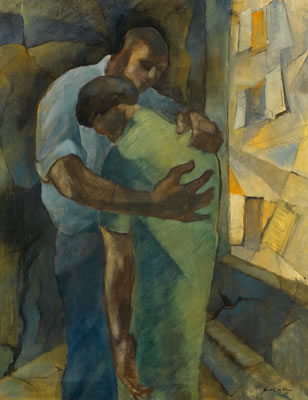
JAMES CARROLL MCMILLAN (1925-2022). In a 2009 reflection, James McMillan wrote that he had “understood quite early that my art could not be about ‘Art for Art’s sake’ only. It had to be about Life itself and at its fullest, as we live it and come to understand it.” For nearly seventy years as a practitioner and educator, McMillan boldly addressed the issues of racism and injustice on canvas and in the classroom, imbuing these daunting themes with notes of resilience and seeking always to put his “art to purpose.” . James McMillan’s parents—college graduates determined to confront prejudice in the Jim Crow South—were the exception, rather than the rule, in Sanford, North Carolina. Through their work as teachers in the public school system and leadership of the local NAACP chapter, McMillian learned that education and a sense of civic responsibility were essential to pe... Read full biography