An abstract painter whose early career was realism, especially urban street scenes, John Sennhauser began changing his style to non-objective in the early 1940s. He was born in Switzerland, was... Read full biography
An abstract painter whose early career was realism, especially urban street scenes, John Sennhauser began changing his style to non-objective in the early 1940s. He was born in Switzerland, was raised in Italy where he studied at the Royal Academy in Venice for two years and then in 1928,... Read full biography
An abstract painter whose early career was realism, especially urban street scenes, John Sennhauser began changing his style to non-objective in the early 1940s. He was born in Switzerland, was raised in Italy where he studied at the Royal Academy in Venice for two years and then in 1928, immigrated to the United States, first earning a living as an architectural draftsman. He studied at Cooper Union from 1930 to 1933, and then taught at the Leonardo da Vinci Art School from 1936 to 1942... Read full biography
An abstract painter whose early career was realism, especially urban street scenes, John Sennhauser began changing his style to non-objective in the early 1940s. He was born in Switzerland, was raised in Italy where he studied at the Royal Academy in Venice for two years and then in 1928, immigrated to the United States, first earning a living as an architectural draftsman. He studied at Cooper Union from 1930 to 1933, and then taught at the Leonardo da Vinci Art School from 1936 to 1942 followed by teaching at the Contemporary School of Art in New York. He also did some private mural commission work. In 1943, he took a job at the Solomon R. Guggenheim Foundation, working for Hilla Rebay, who became director of the Guggenheim Museum. About... Read full biography
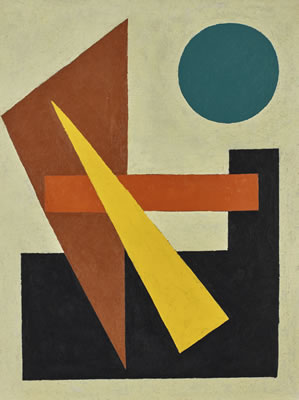
An abstract painter whose early career was realism, especially urban street scenes, John Sennhauser began changing his style to non-objective in the early 1940s. He was born in Switzerland, was raised in Italy where he studied at the Royal Academy in Venice for two years and then in 1928, immigrated to the United States, first earning a living as an architectural draftsman. He studied at Cooper Union from 1930 to 1933, and then taught at the Leonardo da Vinci Art School from 1936 to 1942 followed by teaching at the Contemporary School of Art in New York. He also did some private mural commission work. In 1943, he took a job at the Solomon R. Guggenheim Foundation, working for Hilla Rebay, who became director of the Guggenheim Museum. About that same time, he began expressing his strong leanings towards abstraction and described his inspirati... Read full biography