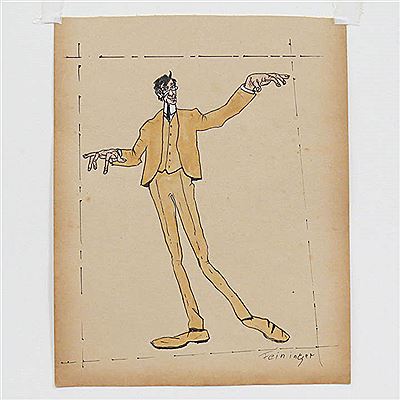
An abstract modernist, Lyonel Charles Adrian Feininger was part of the German avant-garde of the early twentieth century and one of the early teachers at the Bauhaus in Weimar, Germany in 1919,... Read full biography
An abstract modernist, Lyonel Charles Adrian Feininger was part of the German avant-garde of the early twentieth century and one of the early teachers at the Bauhaus in Weimar, Germany in 1919, founded by architect Walter Gropius. In 1921, he had a joint exhibition with Paul Klee at the Weimar... Read full biography
An abstract modernist, Lyonel Charles Adrian Feininger was part of the German avant-garde of the early twentieth century and one of the early teachers at the Bauhaus in Weimar, Germany in 1919, founded by architect Walter Gropius. In 1921, he had a joint exhibition with Paul Klee at the Weimar Museum. With Cubist style and evocative color, he depicted modern life, especially factories, bridges, ships, harbors, and buildings. Feininger was born in New York City to German Jewish parents, son of... Read full biography
An abstract modernist, Lyonel Charles Adrian Feininger was part of the German avant-garde of the early twentieth century and one of the early teachers at the Bauhaus in Weimar, Germany in 1919, founded by architect Walter Gropius. In 1921, he had a joint exhibition with Paul Klee at the Weimar Museum. With Cubist style and evocative color, he depicted modern life, especially factories, bridges, ships, harbors, and buildings. Feininger was born in New York City to German Jewish parents, son of violinist Karl Feininger and singer Elizabeth Cecilia (Lutz) Feininger. He moved to Germany in 1887 intending to study music but taking drawing lessons in Hamburg instead. He moved to Berlin in 1888, enrolling at the Royal Academy of Art. At the... Read full biography
An abstract modernist, Lyonel Charles Adrian Feininger was part of the German avant-garde of the early twentieth century and one of the early teachers at the Bauhaus in Weimar, Germany in 1919, founded by architect Walter Gropius. In 1921, he had a joint exhibition with Paul Klee at the Weimar Museum. With Cubist style and evocative color, he depicted modern life, especially factories, bridges, ships, harbors, and buildings. Feininger was born in New York City to German Jewish parents, son of violinist Karl Feininger and singer Elizabeth Cecilia (Lutz) Feininger. He moved to Germany in 1887 intending to study music but taking drawing lessons in Hamburg instead. He moved to Berlin in 1888, enrolling at the Royal Academy of Art. At the request of his father, he moved to Belgium in 1890, attending the Collège Saint Servais in Lüttich, but returne... Read full biography