Mary Frank is known for creating stoneware sculptures that have the appearance of terra cotta fragments dug up at an archaeological site. Sometimes a half-finished relief head barely escapes from the... Read full biography
Mary Frank is known for creating stoneware sculptures that have the appearance of terra cotta fragments dug up at an archaeological site. Sometimes a half-finished relief head barely escapes from the clay; sometimes a figure, as in "Untitled" (1975), lies in pieces. Born in England in 1933, Frank... Read full biography
Mary Frank is known for creating stoneware sculptures that have the appearance of terra cotta fragments dug up at an archaeological site. Sometimes a half-finished relief head barely escapes from the clay; sometimes a figure, as in "Untitled" (1975), lies in pieces. Born in England in 1933, Frank had her first one-woman show at the Poindexter Gallery in New York in 1958, and has shown at least once a year ever since. She has taught at the New School for Social Research and Queens College and... Read full biography
Mary Frank is known for creating stoneware sculptures that have the appearance of terra cotta fragments dug up at an archaeological site. Sometimes a half-finished relief head barely escapes from the clay; sometimes a figure, as in "Untitled" (1975), lies in pieces. Born in England in 1933, Frank had her first one-woman show at the Poindexter Gallery in New York in 1958, and has shown at least once a year ever since. She has taught at the New School for Social Research and Queens College and has been the recipient of numerous awards, including a National Council of the Arts Grant and a Guggenheim award. Franks terra cottas transmit complex emotions, often of melancholy and quiet pathos. In "Lovers" (1973-1974), intertwined male and female... Read full biography
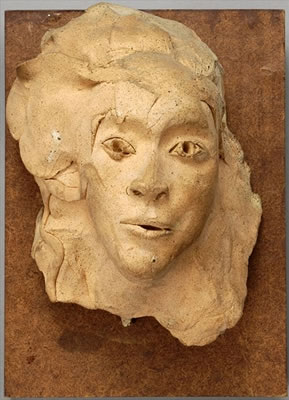
Mary Frank is known for creating stoneware sculptures that have the appearance of terra cotta fragments dug up at an archaeological site. Sometimes a half-finished relief head barely escapes from the clay; sometimes a figure, as in "Untitled" (1975), lies in pieces. Born in England in 1933, Frank had her first one-woman show at the Poindexter Gallery in New York in 1958, and has shown at least once a year ever since. She has taught at the New School for Social Research and Queens College and has been the recipient of numerous awards, including a National Council of the Arts Grant and a Guggenheim award. Franks terra cottas transmit complex emotions, often of melancholy and quiet pathos. In "Lovers" (1973-1974), intertwined male and female figures made up of large, broken shards of clay lie in ancient-looking fragments that suggest both the transitory nature of passion, and... Read full biography