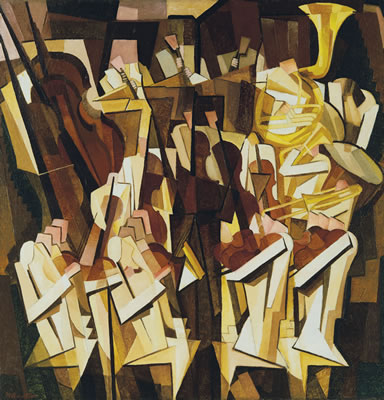
1896 Minsk, Russia - 1974 Nyack, New York. Known for: Painter-surreal-real view-figure, still life.
Morris Kantor was born in Minsk, Russia in 1896, and moved to New York in 1906. Early in his career he experimented with Futurism and Cubism. In 1916 he studied landscape painting with Homer Boss...
Read full biography Morris Kantor was born in Minsk, Russia in 1896, and moved to New York in 1906. Early in his career he experimented with Futurism and Cubism. In 1916 he studied landscape painting with Homer Boss (1882-1956). In 1928, after returning to New York City from a year in Paris, Kantor developed a style...
Read full biography Morris Kantor was born in Minsk, Russia in 1896, and moved to New York in 1906. Early in his career he experimented with Futurism and Cubism. In 1916 he studied landscape painting with Homer Boss (1882-1956). In 1928, after returning to New York City from a year in Paris, Kantor developed a style in which he combined Realism with Fantasy, often taking the streets of New York as his subject matter. By 1940, he was focusing on figural studies. Today Kantor's work can be found in such institutions...
Read full biography Morris Kantor was born in Minsk, Russia in 1896, and moved to New York in 1906. Early in his career he experimented with Futurism and Cubism. In 1916 he studied landscape painting with Homer Boss (1882-1956). In 1928, after returning to New York City from a year in Paris, Kantor developed a style in which he combined Realism with Fantasy, often taking the streets of New York as his subject matter. By 1940, he was focusing on figural studies. Today Kantor's work can be found in such institutions as: the Whitney Museum of American Art, NY; the Metropolitan Museum of Art, NY; the Museum of Modern Art, NY; the Art Institute of Chicago; and the Pennsylvania Academy of the Fine Arts. Source:. Peter Falk, Who Was Who in American Art...
Read full biography Morris Kantor was born in Minsk, Russia in 1896, and moved to New York in 1906. Early in his career he experimented with Futurism and Cubism. In 1916 he studied landscape painting with Homer Boss (1882-1956). In 1928, after returning to New York City from a year in Paris, Kantor developed a style in which he combined Realism with Fantasy, often taking the streets of New York as his subject matter. By 1940, he was focusing on figural studies. Today Kantor's work can be found in such institutions as: the Whitney Museum of American Art, NY; the Metropolitan Museum of Art, NY; the Museum of Modern Art, NY; the Art Institute of Chicago; and the Pennsylvania Academy of the Fine Arts. Source:. Peter Falk, Who Was Who in American Art