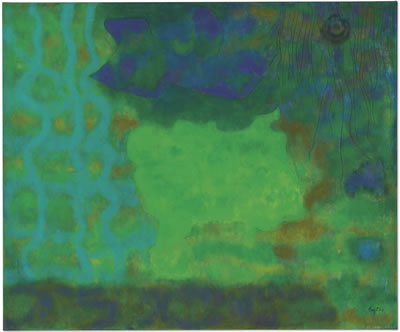
Born in Pittsburgh, Pennsylvania, and growing up in Reading, Pennsylvania, William Baziotes was an Abstract Expressionist closely aligned with Gestural painting and Surrealism. He painted to express... Read full biography
Born in Pittsburgh, Pennsylvania, and growing up in Reading, Pennsylvania, William Baziotes was an Abstract Expressionist closely aligned with Gestural painting and Surrealism. He painted to express his own emotions about the mysteries of life and used rich colors symbolism. He worked briefly for a... Read full biography
Born in Pittsburgh, Pennsylvania, and growing up in Reading, Pennsylvania, William Baziotes was an Abstract Expressionist closely aligned with Gestural painting and Surrealism. He painted to express his own emotions about the mysteries of life and used rich colors symbolism. He worked briefly for a newspaper and in a stained-glass factory where his friends encouraged his art talent. He moved to New York City in 1933 and studied for the next three years at the National Academy of Design,... Read full biography
Born in Pittsburgh, Pennsylvania, and growing up in Reading, Pennsylvania, William Baziotes was an Abstract Expressionist closely aligned with Gestural painting and Surrealism. He painted to express his own emotions about the mysteries of life and used rich colors symbolism. He worked briefly for a newspaper and in a stained-glass factory where his friends encouraged his art talent. He moved to New York City in 1933 and studied for the next three years at the National Academy of Design, primarily with Leon Kroll. From 1936 to 1941, he was a WPA artist, working as a teacher and in the Easel Painting Division. In the early 1940s, he came under the influence of European Surrealists who were expatriates in New York, and he also experimented... Read full biography
Born in Pittsburgh, Pennsylvania, and growing up in Reading, Pennsylvania, William Baziotes was an Abstract Expressionist closely aligned with Gestural painting and Surrealism. He painted to express his own emotions about the mysteries of life and used rich colors symbolism. He worked briefly for a newspaper and in a stained-glass factory where his friends encouraged his art talent. He moved to New York City in 1933 and studied for the next three years at the National Academy of Design, primarily with Leon Kroll. From 1936 to 1941, he was a WPA artist, working as a teacher and in the Easel Painting Division. In the early 1940s, he came under the influence of European Surrealists who were expatriates in New York, and he also experimented with Automatism. He was also close to Robert Motherwell and Mark Rothko, with whom he founded the Subjects of the Artists School in 1948. The prev... Read full biography