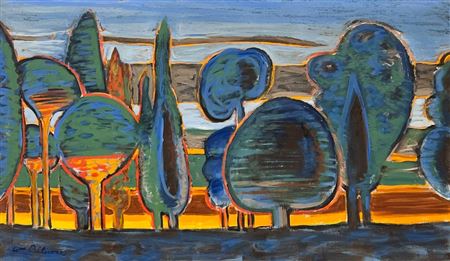
Born 1915 Philadelphia, Pennsylvania. Known for: Abstract, landscape, non-objective.
William Pellicon, a son of Italian immigrants from Calabria, was a self-taught beginner who received scholarships to Temple Univesity, the Pennsylvania Academy of Art and Philadelphia's famed Barnes...
Read full biography William Pellicon, a son of Italian immigrants from Calabria, was a self-taught beginner who received scholarships to Temple Univesity, the Pennsylvania Academy of Art and Philadelphia's famed Barnes Foundation. He was a merchant marine during World War II and a four-year farmer in Pennsylvania for...
Read full biography William Pellicon, a son of Italian immigrants from Calabria, was a self-taught beginner who received scholarships to Temple Univesity, the Pennsylvania Academy of Art and Philadelphia's famed Barnes Foundation. He was a merchant marine during World War II and a four-year farmer in Pennsylvania for New York City, where he became known for his works done with paint and fire. The work drew attention from both "Life" and "Look" magazine. With time William's style changed to more fantastical...
Read full biography William Pellicon, a son of Italian immigrants from Calabria, was a self-taught beginner who received scholarships to Temple Univesity, the Pennsylvania Academy of Art and Philadelphia's famed Barnes Foundation. He was a merchant marine during World War II and a four-year farmer in Pennsylvania for New York City, where he became known for his works done with paint and fire. The work drew attention from both "Life" and "Look" magazine. With time William's style changed to more fantastical subjects.
William Pellicon, a son of Italian immigrants from Calabria, was a self-taught beginner who received scholarships to Temple Univesity, the Pennsylvania Academy of Art and Philadelphia's famed Barnes Foundation. He was a merchant marine during World War II and a four-year farmer in Pennsylvania for New York City, where he became known for his works done with paint and fire. The work drew attention from both "Life" and "Look" magazine. With time William's style changed to more fantastical subjects.