Common Mergansers in Spring
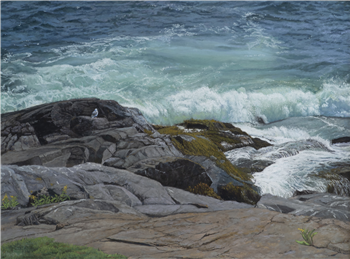
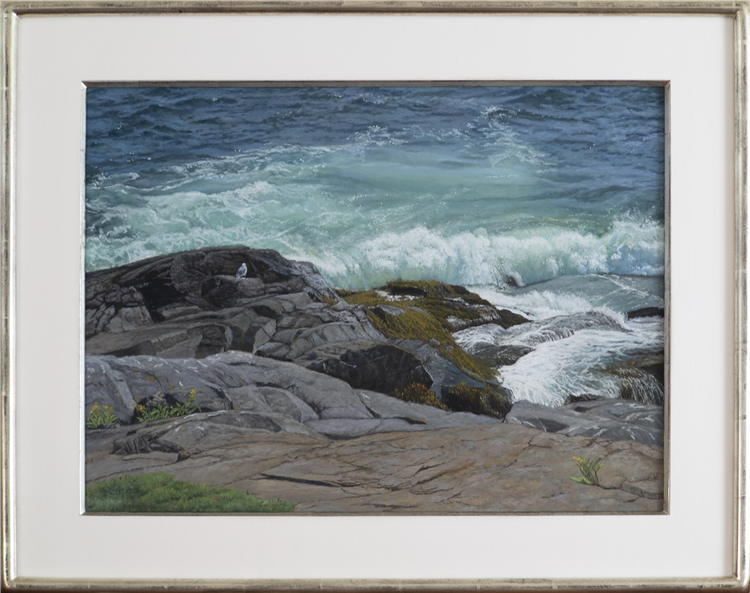
Cindy House was drawn to nature at an early age and credits her mother, a natural history teacher and published wildlife photographer, with cultivating her appreciation for the splendor of New England’s ecosystems.

Discover artwork available for purchase from Vose Galleries .

Cindy House was drawn to nature at an early age and credits her mother, a natural history teacher and published wildlife photographer, with cultivating her appreciation for the splendor of New England’s ecosystems.


The pair of hunters and their dog are strategically camouflaged to track their quarry, but visible to the viewer and Aiden Lassell Ripley has carefully rendered each man’s stance and positioning as their attention is drawn to the bird overhead.


Gladys Nelson Smith greatly enjoyed gardening, thus her output from the 1940s onward included an impressive series of floral arrangements using blooms she carefully cultivated. Poppies and Hydrangeas is one such example, offering an explosion of charming color.


Arrangement with Irises and Poppies exemplifies Peterson’s fascination with color while working in the still life vein, and in this case, she seemed particularly absorbed with the range of possibility one can achieve through a very limited palette of yellow, green and white.

A highly successful portrait painter with such elite clients as President Calvin Coolidge and Mr. and Mrs. John D. Rockefeller, Jr., Charles Hopkinson was acclaimed by Time Magazine in 1948 as “The Dean of U.S. Portraitists.”


"New England has a feeling of roots. The area is very picturesque. The landscape is very lush – it makes for rich painting." -- Paul Strisik, as quoted in David Green, “Famous Rockport painter discusses his art, life,” Boston Ledger, May 18, 1988

The fondness for detail seen in Walter Launt Palmer’s earlier interiors translated well to his landscapes, as every rock, twig, and snow-laden tree branch play a role in his carefully arranged winter symphonies.

Whether studying the sea from his 35-foot sloop or gathering information on small-scale oil and casein studies from the shoreline and woodlands, Demers prefers to work from nature, rather than from photo. His paintings embody the freshness of the natural world and the discerning eyes of an artist.

Arthur Morris Cohen was always sketching and even rigged up his vehicle as a mobile studio of sorts, with places set aside for his palette and brushes while he spent hours studying and rendering the ephemeral luminescence of the world around him.


Hunting Pals is a brilliant example of Aiden Lassell Ripley's work, demonstrating his dexterity with the watercolor medium. One is immediately taken by the level of detail he was able to achieve when rendering the two figures and their boat and the various implements required for their outing.


In Moonlight, William Morris Hunt has expertly rendered the impression of the glowing orb overhead as it pierces the pitch-black darkness and cloud cover, and reflects in the surface of the water below, casting shadows of a pair of trees in the foreground.

Reynolds Beal was an avid sailor, and the New England coastline, particularly Provincetown, Gloucester and Rockport, where he spent the last 20 years of his life, became his favorite subject matter.


'Icy River (West River, Vermont)' exemplifies Hibbard’s gift for finding elements of beauty in an otherwise commonplace scene. With passages of yellow and pink, he has rendered the sun’s rays falling on the snow, thereby imbuing a chilly winter scene with undeniable warmth and optimism.


'Norway' is housed in a period Newcomb-Macklin frame, which is likely original to the painting.

Nary a detail escapes John Whorf’s attention in this wonderful rendition of an angler’s day of relaxation on the water, from the fisherman’s waders and the curved brim of his well-worn hat to the gentle bend of the pole and line as an unseen fish goes for a bite.


With its low horizon, striking nocturnal theme, and rich color applied with bold brushwork, River’s Edge by Moonlight, painted in 1896, is a quintessential example of Henry Ward Ranger’s work from this period.

In Paula Gets the Mail, we see the influence of his early teacher, Birge Harrison, in the deep purple grey of the sky and the distant hills, juxtaposed against the warmth of the ochre fields.

In graphite drawings, oil, watercolor and egg tempera paintings of finite detail and delicacy, Whalley depicts landscapes and figures, as well as arrangements of discarded objects that he collects while exploring the coastline near his home in Damariscotta, Maine.

Born and raised in Newark, New Jersey, Henry Gasser enjoyed a successful career as first a student and then later as an artist, teacher and writer from the city’s commercial center.

Old South Meeting House, Washington Street, Boston, Massachusetts is one of Enrico Meneghelli’s largest canvases and his eye for detail is reflected throughout the composition, from the carefully drawn facades and signage of the shops to the distinctive renditions of the townspeople.

Schooled in the European academic tradition, Grant brought to his canvasses an intelligent and disciplined feeling for composition, form and color, all elements on display in 'Street Scene in Gloucester.'


The red dwelling in the picture closely resembles the historic and oft-painted red house adjacent to Swim Beach, with Manana and Smutty Nose Island across the harbor.

Street in Provincetown exemplifies the bold brushwork and vibrant colors Lillian Burk Meeser often painted with, depicting the trees in patches of blues and greens and the passersby in broad, gestural strokes.


In graphite drawings, oil, watercolor and egg tempera paintings of finite detail and delicacy, John Whalley depicts landscapes and figures, as well as arrangements of discarded objects that he collects while exploring the coastline near his home in Damariscotta, Maine.

'The Harvest Gleaners, Giverny' is an excellent example of Theodore Wendel's sought-after Giverny scenes.

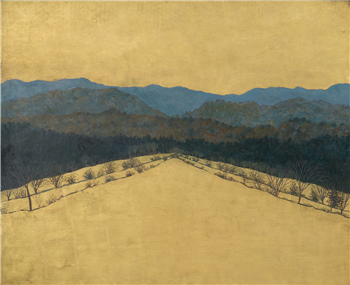
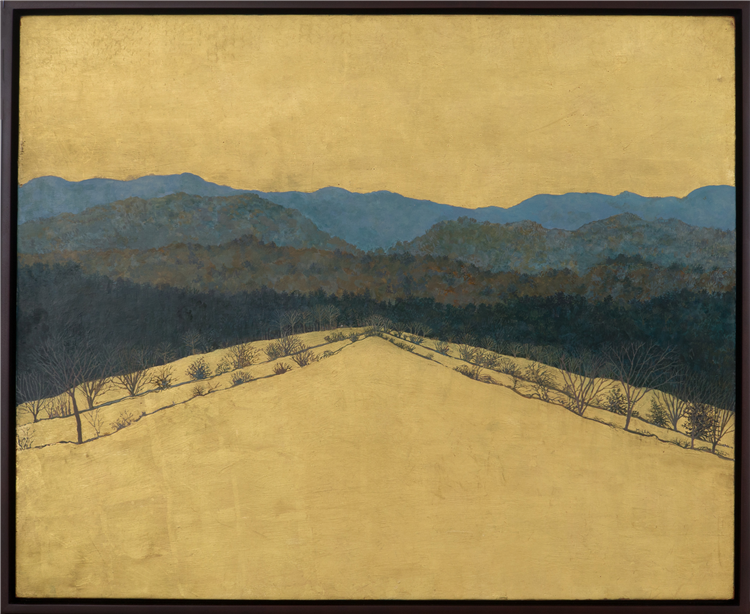
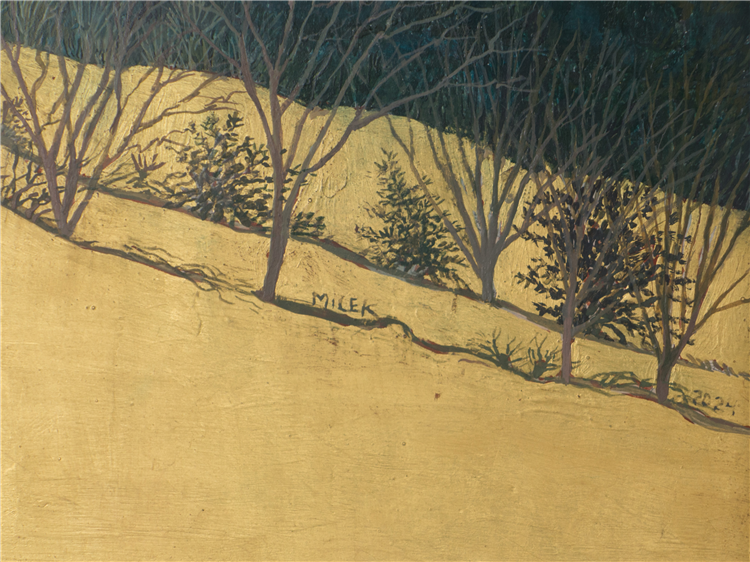
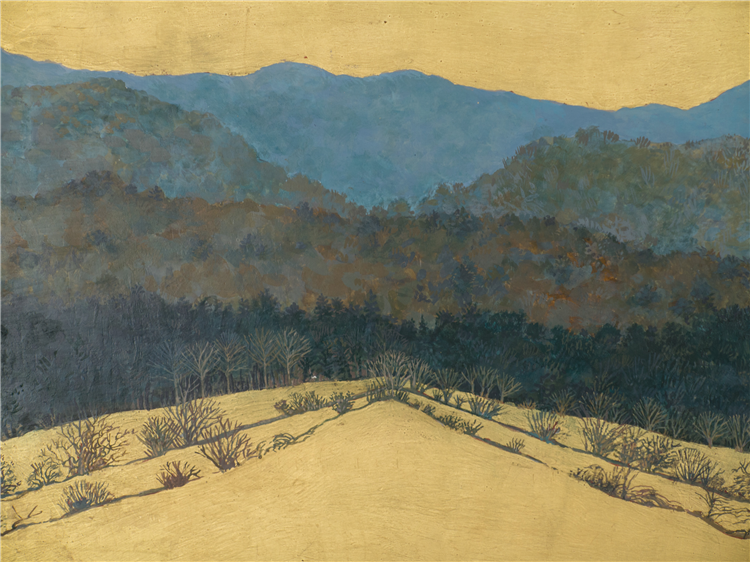
“Vision is the quest; color is the gift. Love and discipline are the driving forces that allow me to conceptualize and paint my reverence for nature.” – Gary Milek


Jacob I. Greenleaf ventured to nearby Gloucester for inspiration, as evidenced by Squam River from Andrews Bridge, a sweeping depiction of the Annisquam River looking northeast towards Annisquam Light.

'Nostalgic Summer' is a quintessential example of Eric Sloane's work, combining the artist’s personal reverence for the understated beauty of the old farmhouse and stone barn with dramatic lighting that emblazons the surrounding landscape in vivid reds and golds that evoke the changing seasons.


Created around 1923, Still Life: Turnip and Carrots demonstrates Lever’s openness to experimenting with different concepts, as well as his remarkable talent for the watercolor medium, and was likely shown at an exhibition of his work held at the Delaware Art Museum in 1978.


Benjamin Champney’s appreciation for the singular beauty of the White Mountains region can be found in his canvases featuring its grand peaks, peaceful valleys, and forest interiors, but he also occasionally painted the pastoral scenery around Woburn, Massachusetts.