Artist signatures page loaded. Found 1 signature examples for Karl Pavlovich Briullov. Sign in or subscribe to view signatures.
Karl Pavlovich Briullov SIGNATURES
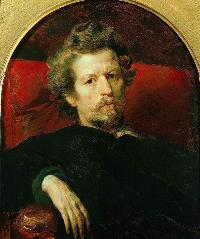
1799 St. Petersburg, Russia - 1852 Marciano, Italy. Known for: Historical painting, romanticism.
The Russian son of an Italian sculptor, Karl Bryullov studied at the Imperial Academy from 1815 to 1821 under the guidance of Andrei Ivanov (1772-1848). He settled in Rome between 1823 and 1824 and... Read full biography
The Russian son of an Italian sculptor, Karl Bryullov studied at the Imperial Academy from 1815 to 1821 under the guidance of Andrei Ivanov (1772-1848). He settled in Rome between 1823 and 1824 and had major success with The Last Day of Pompeii, (1830-3; St. Petersburg, Russian State Museum),... Read full biography
The Russian son of an Italian sculptor, Karl Bryullov studied at the Imperial Academy from 1815 to 1821 under the guidance of Andrei Ivanov (1772-1848). He settled in Rome between 1823 and 1824 and had major success with The Last Day of Pompeii, (1830-3; St. Petersburg, Russian State Museum), inspired by archaeological research, Pliny's account, and Pacini's opera (1825). The work reputedly moved Bulwer-Lytton to write his novel The Last Days of Pompeii (1834). A combination of Raphael's... Read full biography
The Russian son of an Italian sculptor, Karl Bryullov studied at the Imperial Academy from 1815 to 1821 under the guidance of Andrei Ivanov (1772-1848). He settled in Rome between 1823 and 1824 and had major success with The Last Day of Pompeii, (1830-3; St. Petersburg, Russian State Museum), inspired by archaeological research, Pliny's account, and Pacini's opera (1825). The work reputedly moved Bulwer-Lytton to write his novel The Last Days of Pompeii (1834). A combination of Raphael's classicism (it includes references to the Fire in the Borgo), realistic accuracy, and melodramatic Romanticism, it was admired by Sir Walter Scott and exhibited to great acclaim in Rome, Milan, and Paris. Bryullov visited Greece, Turkey, and Asia Minor,... Read full biography
The Russian son of an Italian sculptor, Karl Bryullov studied at the Imperial Academy from 1815 to 1821 under the guidance of Andrei Ivanov (1772-1848). He settled in Rome between 1823 and 1824 and had major success with The Last Day of Pompeii, (1830-3; St. Petersburg, Russian State Museum), inspired by archaeological research, Pliny's account, and Pacini's opera (1825). The work reputedly moved Bulwer-Lytton to write his novel The Last Days of Pompeii (1834). A combination of Raphael's classicism (it includes references to the Fire in the Borgo), realistic accuracy, and melodramatic Romanticism, it was admired by Sir Walter Scott and exhibited to great acclaim in Rome, Milan, and Paris. Bryullov visited Greece, Turkey, and Asia Minor, returning to Russia in 1835 to become a professor. He undertook decorations for St. Isaac's... Read full biography
Sign in required to view signatures
Karl Pavlovich Briullov - Artist Signatures
Karl Pavlovich Briullov Artist Signatures
Access Required
askART does not represent or warrant that the information accessible via this Site is accurate, complete or current, including, but not limited to, such information contained in artist biographies, auction records, samples of artists' signatures, artworks for sale, and information and value estimates contained in artist price valuation reports.