Gustav Wolf (1887–1947), German artist. Wolf began his artistic training at the private school of Hans Thoma (1839–1924), who wanted to promote Wolf's talent and encouraged him in his own style of... Read full biography
Gustav Wolf (1887–1947), German artist. Wolf began his artistic training at the private school of Hans Thoma (1839–1924), who wanted to promote Wolf's talent and encouraged him in his own style of art. Wolf's paintings belong to symbolism*, including motifs of his own experiences, imagination, and... Read full biography
Gustav Wolf (1887–1947), German artist. Wolf began his artistic training at the private school of Hans Thoma (1839–1924), who wanted to promote Wolf's talent and encouraged him in his own style of art. Wolf's paintings belong to symbolism*, including motifs of his own experiences, imagination, and visions, such as mythical creatures, as do his woodcuts* Zehn Holzschnitte i–x from 1910. Wolf served as professor of graphic arts at Karlsruhe until the Nazis came to power. In 1938, Wolf emigrated... Read full biography
Gustav Wolf (1887–1947), German artist. Wolf began his artistic training at the private school of Hans Thoma (1839–1924), who wanted to promote Wolf's talent and encouraged him in his own style of art. Wolf's paintings belong to symbolism*, including motifs of his own experiences, imagination, and visions, such as mythical creatures, as do his woodcuts* Zehn Holzschnitte i–x from 1910. Wolf served as professor of graphic arts at Karlsruhe until the Nazis came to power. In 1938, Wolf emigrated to the United States. Living in exile, horrified and frustrated by the Holocaust, Wolf created in 1945 several expressionist* paintings with illustrations of the Jewish victims in the concentration camps. He was primarily a printmaker. His... Read full biography
Gustav Wolf (1887–1947), German artist. Wolf began his artistic training at the private school of Hans Thoma (1839–1924), who wanted to promote Wolf's talent and encouraged him in his own style of art. Wolf's paintings belong to symbolism*, including motifs of his own experiences, imagination, and visions, such as mythical creatures, as do his woodcuts* Zehn Holzschnitte i–x from 1910. Wolf served as professor of graphic arts at Karlsruhe until the Nazis came to power. In 1938, Wolf emigrated to the United States. Living in exile, horrified and frustrated by the Holocaust, Wolf created in 1945 several expressionist* paintings with illustrations of the Jewish victims in the concentration camps. He was primarily a printmaker. His publications include Die Schoepfungstage (seven lithographs, with the biblical texts on the creation of the world), color w... Read full biography
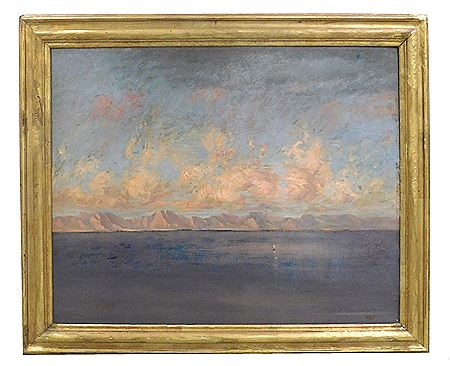
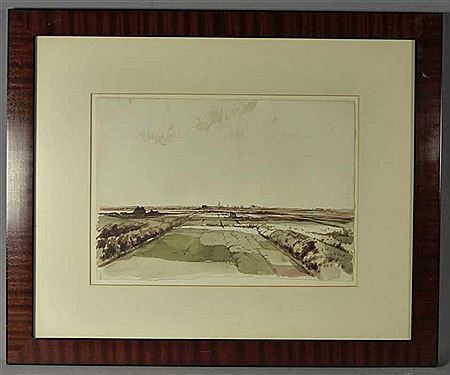
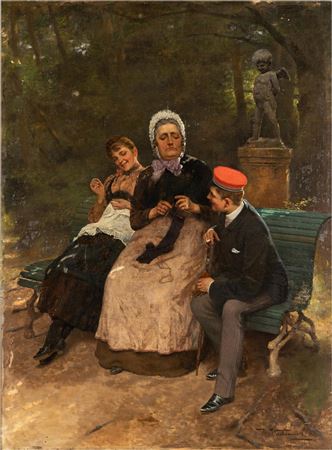
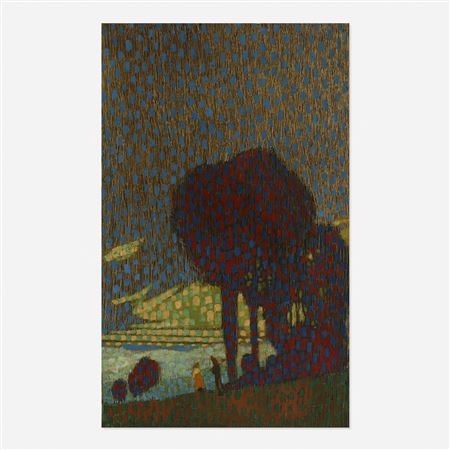
Page shows 3 sample artworks and 1 artists similar to Gustav Wolf. Sample images show some of Gustav Wolf's highest-priced auction results. Similar artists are ranked by similarity to Gustav Wolf's work and style.
Sample Images for Gustav Wolf
Carousel showing 3 sample artworks by Gustav Wolf. Use arrow keys to navigate, or click the indicator dots.
Carousel auto-advances every 5 seconds. Use arrow keys to manually navigate and stop auto-rotation.
Collection of similar artists. Use arrow keys to navigate between artists, Enter or Space to select an artist, Home to go to first artist, End to go to last artist. Collection contains 1 artists.