Caspar David Friedrich PRICE CHARTS
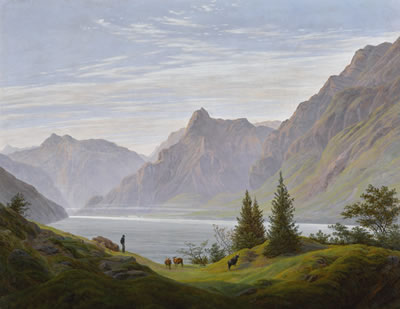
1774 Greifswald, Germany - 1840. Known for: Neo-expressionist painting, figurative romanticism.
Unraveling the Mysteries behind Caspar David Friedrich’s “Wanderer”, Alina Cohen, Artsy, Web, Aug 6, 2018 5:32 pm. In Caspar David Friedrich’s iconic Wanderer above the Sea of Fog (ca. 1818), a man... Read full biography
Unraveling the Mysteries behind Caspar David Friedrich’s “Wanderer”, Alina Cohen, Artsy, Web, Aug 6, 2018 5:32 pm. In Caspar David Friedrich’s iconic Wanderer above the Sea of Fog (ca. 1818), a man wearing a dark green overcoat and boots overlooks a cloudy landscape, steadying himself with a cane.... Read full biography
Unraveling the Mysteries behind Caspar David Friedrich’s “Wanderer”, Alina Cohen, Artsy, Web, Aug 6, 2018 5:32 pm. In Caspar David Friedrich’s iconic Wanderer above the Sea of Fog (ca. 1818), a man wearing a dark green overcoat and boots overlooks a cloudy landscape, steadying himself with a cane. Mounted on a dark, craggy rock face, the figure stands at the center of distant, converging planes. Art historian Joseph Koerner, a professor at Harvard University, notes that the midpoint of the... Read full biography
Unraveling the Mysteries behind Caspar David Friedrich’s “Wanderer”, Alina Cohen, Artsy, Web, Aug 6, 2018 5:32 pm. In Caspar David Friedrich’s iconic Wanderer above the Sea of Fog (ca. 1818), a man wearing a dark green overcoat and boots overlooks a cloudy landscape, steadying himself with a cane. Mounted on a dark, craggy rock face, the figure stands at the center of distant, converging planes. Art historian Joseph Koerner, a professor at Harvard University, notes that the midpoint of the painting rests at the man’s chest. “The heart is the center of the universe,” he says. Over the past two centuries, the image has become a cultural icon. It adorned the cover of Terry Eagleton’s 1990 philosophical tome The Ideology of the Aesthetic. It... Read full biography
Unraveling the Mysteries behind Caspar David Friedrich’s “Wanderer”, Alina Cohen, Artsy, Web, Aug 6, 2018 5:32 pm. In Caspar David Friedrich’s iconic Wanderer above the Sea of Fog (ca. 1818), a man wearing a dark green overcoat and boots overlooks a cloudy landscape, steadying himself with a cane. Mounted on a dark, craggy rock face, the figure stands at the center of distant, converging planes. Art historian Joseph Koerner, a professor at Harvard University, notes that the midpoint of the painting rests at the man’s chest. “The heart is the center of the universe,” he says. Over the past two centuries, the image has become a cultural icon. It adorned the cover of Terry Eagleton’s 1990 philosophical tome The Ideology of the Aesthetic. It has been used to illustrate Franz Schubert’s Winter Journey cycle, a classical music composition that evokes a gloomy, itinerant protagonis... Read full biography
Caspar David Friedrich - Charts
Chart data loaded successfully