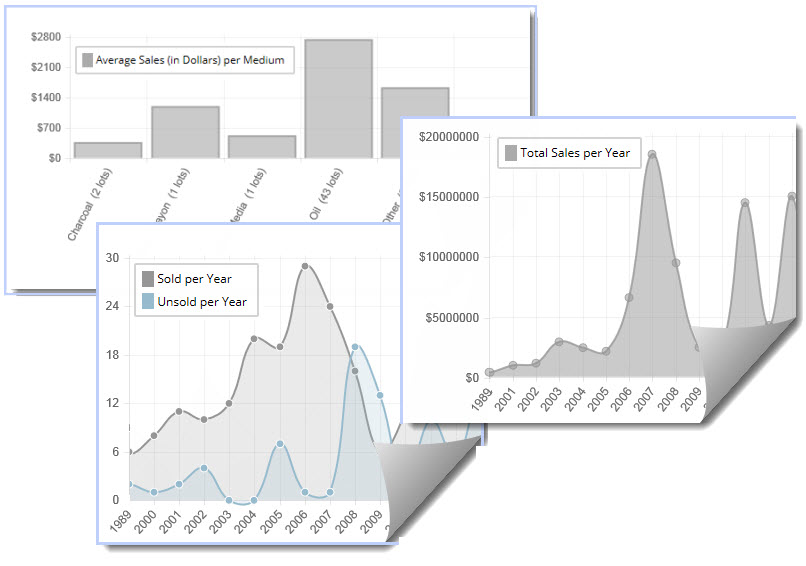
Gerwald Rockenschaub PRICE CHARTS
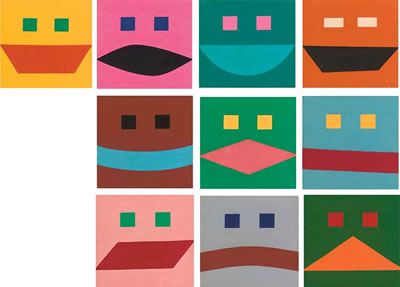
Born 1952 Linz. Known for: Painting.
Gerwald Rockenschaub was born in 1952 in Austria. Gerwald Rockenschaub's early paintings are part of the neo-geo-painting, an art direction of the 1980's, which derives an abstract form from the... Read full biography
Gerwald Rockenschaub was born in 1952 in Austria. Gerwald Rockenschaub's early paintings are part of the neo-geo-painting, an art direction of the 1980's, which derives an abstract form from the contemporary environment and society. In 1987, Rockenschaub turned away from painting, despite his... Read full biography
Gerwald Rockenschaub was born in 1952 in Austria. Gerwald Rockenschaub's early paintings are part of the neo-geo-painting, an art direction of the 1980's, which derives an abstract form from the contemporary environment and society. In 1987, Rockenschaub turned away from painting, despite his success, since this art direction seemed to him to be no longer contemporary. His later installations and sculptures, however, continue the Neo-Geo characteristic connection of clear aesthetic forms and... Read full biography
Gerwald Rockenschaub was born in 1952 in Austria. Gerwald Rockenschaub's early paintings are part of the neo-geo-painting, an art direction of the 1980's, which derives an abstract form from the contemporary environment and society. In 1987, Rockenschaub turned away from painting, despite his success, since this art direction seemed to him to be no longer contemporary. His later installations and sculptures, however, continue the Neo-Geo characteristic connection of clear aesthetic forms and specific environmental conditions. For example, his spatial installations in the Austrian Pavilion or in the MUMOK are on the one hand to be understood as minimalist objects; on the other, they refer to the exhibition conditions of contemporary art In... Read full biography
Gerwald Rockenschaub was born in 1952 in Austria. Gerwald Rockenschaub's early paintings are part of the neo-geo-painting, an art direction of the 1980's, which derives an abstract form from the contemporary environment and society. In 1987, Rockenschaub turned away from painting, despite his success, since this art direction seemed to him to be no longer contemporary. His later installations and sculptures, however, continue the Neo-Geo characteristic connection of clear aesthetic forms and specific environmental conditions. For example, his spatial installations in the Austrian Pavilion or in the MUMOK are on the one hand to be understood as minimalist objects; on the other, they refer to the exhibition conditions of contemporary art In the so-called White Cube. For this, Rockenschaub sometimes intervenes directly in the archi... Read full biography
Gerwald Rockenschaub - Charts
Chart data loaded successfully