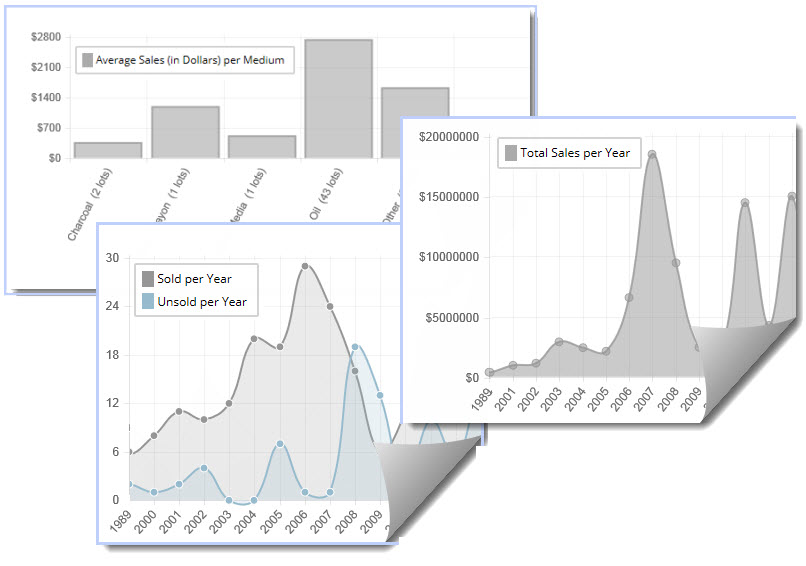
Lars-Erik Falk PRICE CHARTS
1922 - 2018. Known for: Painting and sculpture.
Lars-Erik Falk was born in 1922 and passed away in 2018. Lars Erik Falk was a Swedish artist who studied at Otte Sköld's and Isaac Grünewald's painting schools in Stockholm in the mid-1940s. He was... Read full biography
Lars-Erik Falk was born in 1922 and passed away in 2018. Lars Erik Falk was a Swedish artist who studied at Otte Sköld's and Isaac Grünewald's painting schools in Stockholm in the mid-1940s. He was inspired by the German School of Architecture Bauhaus, the art magazine De Stijl, and Russian... Read full biography
Lars-Erik Falk was born in 1922 and passed away in 2018. Lars Erik Falk was a Swedish artist who studied at Otte Sköld's and Isaac Grünewald's painting schools in Stockholm in the mid-1940s. He was inspired by the German School of Architecture Bauhaus, the art magazine De Stijl, and Russian constructivism. Falk's art was expressed in cubist and geometric paintings but soon developed into dynamic sculptures, which were designed after careful research into the balance between movement and... Read full biography
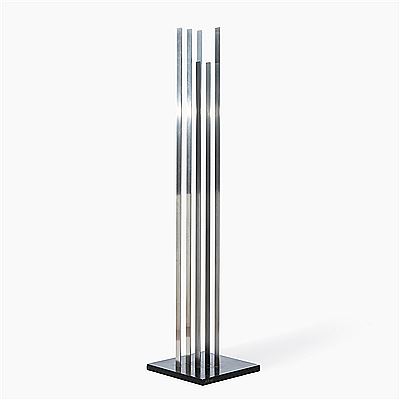
Lars-Erik Falk was born in 1922 and passed away in 2018. Lars Erik Falk was a Swedish artist who studied at Otte Sköld's and Isaac Grünewald's painting schools in Stockholm in the mid-1940s. He was inspired by the German School of Architecture Bauhaus, the art magazine De Stijl, and Russian constructivism. Falk's art was expressed in cubist and geometric paintings but soon developed into dynamic sculptures, which were designed after careful research into the balance between movement and stillness. In the 1960s, Lars Erik sculptures were almost exclusively in black, white, or unpainted steel, to later explode in colors such as blue, yellow, red, orange, and green. Above all, the "modular sculptures" were praised, which pointed upwards with... Read full biography
Lars-Erik Falk was born in 1922 and passed away in 2018. Lars Erik Falk was a Swedish artist who studied at Otte Sköld's and Isaac Grünewald's painting schools in Stockholm in the mid-1940s. He was inspired by the German School of Architecture Bauhaus, the art magazine De Stijl, and Russian constructivism. Falk's art was expressed in cubist and geometric paintings but soon developed into dynamic sculptures, which were designed after careful research into the balance between movement and stillness. In the 1960s, Lars Erik sculptures were almost exclusively in black, white, or unpainted steel, to later explode in colors such as blue, yellow, red, orange, and green. Above all, the "modular sculptures" were praised, which pointed upwards with a slope of 73 degrees. Falk's art is represented at the Modern Museum and National Museum in Stockh... Read full biography
Lars-Erik Falk - Charts
Chart data loaded successfully