Leslie Chavez PRICE CHARTS
Born 1978. Known for: Contemporary art, satirical works.
Leslie de Chavez is a contemporary artist from the Philippines known for his satirical works. He produced a work titled "Mr. Chin's Pet Project" which critiques imperialism and neoliberalism in the... Read full biography
Leslie de Chavez is a contemporary artist from the Philippines known for his satirical works. He produced a work titled "Mr. Chin's Pet Project" which critiques imperialism and neoliberalism in the Philippine context. The work depicts a construction of a massive industrial site, likely an export... Read full biography
Leslie de Chavez is a contemporary artist from the Philippines known for his satirical works. He produced a work titled "Mr. Chin's Pet Project" which critiques imperialism and neoliberalism in the Philippine context. The work depicts a construction of a massive industrial site, likely an export processing zone, with workers in precarious conditions and their rights suppressed. The local compradors and foreign capitalists benefit from the cheap labor and raw materials, resulting in a... Read full biography
Leslie de Chavez is a contemporary artist from the Philippines known for his satirical works. He produced a work titled "Mr. Chin's Pet Project" which critiques imperialism and neoliberalism in the Philippine context. The work depicts a construction of a massive industrial site, likely an export processing zone, with workers in precarious conditions and their rights suppressed. The local compradors and foreign capitalists benefit from the cheap labor and raw materials, resulting in a semi-colonial and semi-feudal Philippine society. De Chavez offers a powerful critique on the government's subservience to the interests of foreign capitalists and the local elite
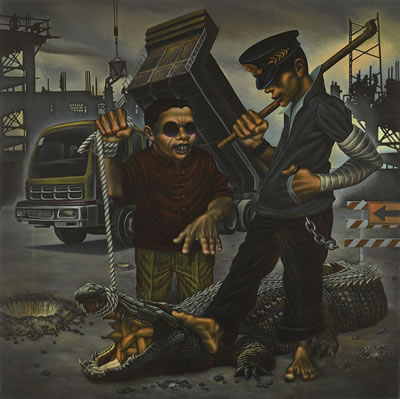
Leslie de Chavez is a contemporary artist from the Philippines known for his satirical works. He produced a work titled "Mr. Chin's Pet Project" which critiques imperialism and neoliberalism in the Philippine context. The work depicts a construction of a massive industrial site, likely an export processing zone, with workers in precarious conditions and their rights suppressed. The local compradors and foreign capitalists benefit from the cheap labor and raw materials, resulting in a semi-colonial and semi-feudal Philippine society. De Chavez offers a powerful critique on the government's subservience to the interests of foreign capitalists and the local elite
Leslie Chavez - Charts
Chart data loaded successfully