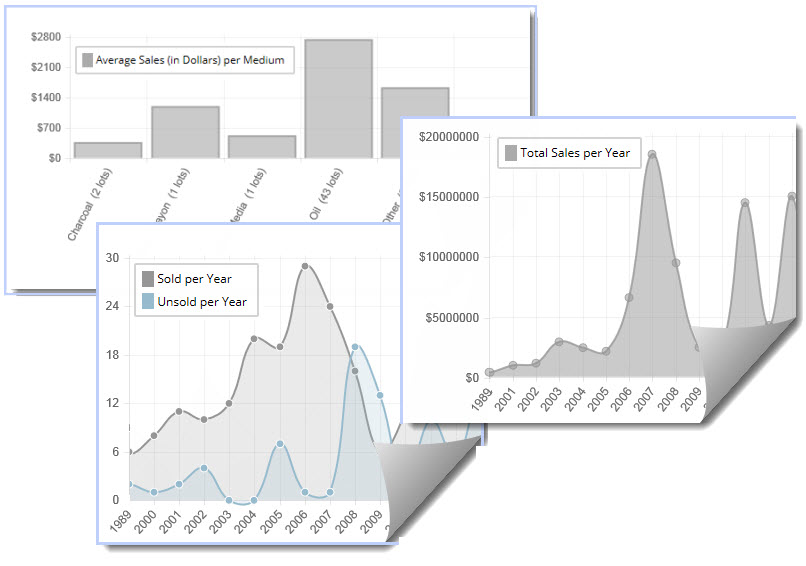
Noria Mabasa PRICE CHARTS
Born 1938 Limpopo Province, South Africa. Known for: Painting and sculpture, Domba figures.
Noria Mabasa was born in 1938 in the Limpopo Province, South Africa. Noria Mabasa spent only one year in formal education, having to walk three hours to the nearest school. Despite this lack of... Read full biography
Noria Mabasa was born in 1938 in the Limpopo Province, South Africa. Noria Mabasa spent only one year in formal education, having to walk three hours to the nearest school. Despite this lack of training, Mabasa began to experiment with clay in the 1970s. Initially, she produced Domba figures... Read full biography
Noria Mabasa was born in 1938 in the Limpopo Province, South Africa. Noria Mabasa spent only one year in formal education, having to walk three hours to the nearest school. Despite this lack of training, Mabasa began to experiment with clay in the 1970s. Initially, she produced Domba figures traditionally used in Venda initiation ceremonies. In her later work, she began to explore more contemporary themes, depicting people and objects that she encountered in daily life. The collection of... Read full biography
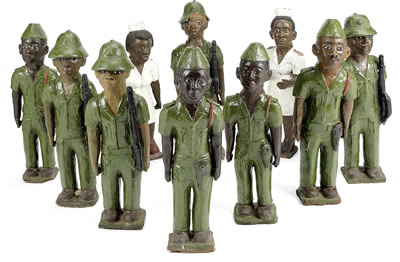
Noria Mabasa was born in 1938 in the Limpopo Province, South Africa. Noria Mabasa spent only one year in formal education, having to walk three hours to the nearest school. Despite this lack of training, Mabasa began to experiment with clay in the 1970s. Initially, she produced Domba figures traditionally used in Venda initiation ceremonies. In her later work, she began to explore more contemporary themes, depicting people and objects that she encountered in daily life. The collection of figures was a mixture of military personnel and members of the medical profession. Mabasa was the only Venda woman to achieve artistic acclaim during the period of Apartheid. Her works thus offer a unique insight into the prejudices and discrimination... Read full biography
Noria Mabasa was born in 1938 in the Limpopo Province, South Africa. Noria Mabasa spent only one year in formal education, having to walk three hours to the nearest school. Despite this lack of training, Mabasa began to experiment with clay in the 1970s. Initially, she produced Domba figures traditionally used in Venda initiation ceremonies. In her later work, she began to explore more contemporary themes, depicting people and objects that she encountered in daily life. The collection of figures was a mixture of military personnel and members of the medical profession. Mabasa was the only Venda woman to achieve artistic acclaim during the period of Apartheid. Her works thus offer a unique insight into the prejudices and discrimination suffered by these people. BIBLIOGRAPHY S. Stack, 'The Neglected Tradition: Towards... Read full biography
Noria Mabasa - Charts
Chart data loaded successfully