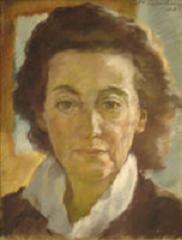
Lotte Laserstein was born in East Germany; her father died in 1902 and she was raised by her mother and grandmother in what is now Gdansk and Berlin. In 1927, she graduated from the Academy of Fine... Read full biography
Lotte Laserstein was born in East Germany; her father died in 1902 and she was raised by her mother and grandmother in what is now Gdansk and Berlin. In 1927, she graduated from the Academy of Fine Arts in Berlin, one of the first female students, and was immediately successful. She quickly became... Read full biography
Lotte Laserstein was born in East Germany; her father died in 1902 and she was raised by her mother and grandmother in what is now Gdansk and Berlin. In 1927, she graduated from the Academy of Fine Arts in Berlin, one of the first female students, and was immediately successful. She quickly became known on the city's art scene for her skilled portrait painting, especially of young modern women of the 1920s. When the Nazis came and took power in 1933, her promising career was cut short when, in... Read full biography
Lotte Laserstein was born in East Germany; her father died in 1902 and she was raised by her mother and grandmother in what is now Gdansk and Berlin. In 1927, she graduated from the Academy of Fine Arts in Berlin, one of the first female students, and was immediately successful. She quickly became known on the city's art scene for her skilled portrait painting, especially of young modern women of the 1920s. When the Nazis came and took power in 1933, her promising career was cut short when, in accordance with the ideology of the time, she was categorized as 3/4 Jewish (her grandparents were Jewish but her own parents were not). As a result, she was increasingly excluded from the art scene. However, an invitation to exhibit at Galerie... Read full biography
Lotte Laserstein was born in East Germany; her father died in 1902 and she was raised by her mother and grandmother in what is now Gdansk and Berlin. In 1927, she graduated from the Academy of Fine Arts in Berlin, one of the first female students, and was immediately successful. She quickly became known on the city's art scene for her skilled portrait painting, especially of young modern women of the 1920s. When the Nazis came and took power in 1933, her promising career was cut short when, in accordance with the ideology of the time, she was categorized as 3/4 Jewish (her grandparents were Jewish but her own parents were not). As a result, she was increasingly excluded from the art scene. However, an invitation to exhibit at Galerie Moderne in Stockholm in 1937 opened up an opportunity for her to leave her home country. Laserstein traveled from Berlin in 1937 and m... Read full biography
Lotte Laserstein - Art Wanted (1 Collectors Seeking Artworks)
Found 1 art wanted listings for Lotte Laserstein
Art Wanted Advertisements
Grid of art wanted advertisements showing 1 listings from collectors and dealers. Use arrow keys to navigate between cards, Enter or Space to interact with elements.