Page loaded successfully. Showing biography for Lotte Laserstein.
Lotte Laserstein BIOGRAPHY
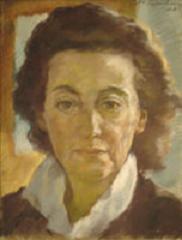
1898 Preussisch, Holland - 1993 Kalmar, Sweden. Known for: Portrait, landscape and rural scene painting and drawing, nudes, realism.
Lotte Laserstein was born in East Germany; her father died in 1902 and she was raised by her mother and grandmother in what is now Gdansk and Berlin. In 1927, she graduated from the Academy of Fine... Read full biography
Lotte Laserstein was born in East Germany; her father died in 1902 and she was raised by her mother and grandmother in what is now Gdansk and Berlin. In 1927, she graduated from the Academy of Fine Arts in Berlin, one of the first female students, and was immediately successful. She quickly became... Read full biography
Lotte Laserstein was born in East Germany; her father died in 1902 and she was raised by her mother and grandmother in what is now Gdansk and Berlin. In 1927, she graduated from the Academy of Fine Arts in Berlin, one of the first female students, and was immediately successful. She quickly became known on the city's art scene for her skilled portrait painting, especially of young modern women of the 1920s. When the Nazis came and took power in 1933, her promising career was cut short when, in... Read full biography
Lotte Laserstein was born in East Germany; her father died in 1902 and she was raised by her mother and grandmother in what is now Gdansk and Berlin. In 1927, she graduated from the Academy of Fine Arts in Berlin, one of the first female students, and was immediately successful. She quickly became known on the city's art scene for her skilled portrait painting, especially of young modern women of the 1920s. When the Nazis came and took power in 1933, her promising career was cut short when, in accordance with the ideology of the time, she was categorized as 3/4 Jewish (her grandparents were Jewish but her own parents were not). As a result, she was increasingly excluded from the art scene. However, an invitation to exhibit at Galerie... Read full biography
Lotte Laserstein was born in East Germany; her father died in 1902 and she was raised by her mother and grandmother in what is now Gdansk and Berlin. In 1927, she graduated from the Academy of Fine Arts in Berlin, one of the first female students, and was immediately successful. She quickly became known on the city's art scene for her skilled portrait painting, especially of young modern women of the 1920s. When the Nazis came and took power in 1933, her promising career was cut short when, in accordance with the ideology of the time, she was categorized as 3/4 Jewish (her grandparents were Jewish but her own parents were not). As a result, she was increasingly excluded from the art scene. However, an invitation to exhibit at Galerie Moderne in Stockholm in 1937 opened up an opportunity for her to leave her home country. Laserstein traveled from Berlin in 1937 and m... Read full biography
Artist Biography
Biography page for Lotte Laserstein ((1898 - 1993)), known for Portrait, landscape and rural scene painting and drawing, nudes, realism. Showing 5 biographical entries and 0 sample artworks.
Lotte Laserstein - Artist Info
About Lotte Laserstein
Name variants
Lotte Lasterstein
Biography from Bukowski Stockholm
Lotte Laserstein was born in East Germany; her father died in 1902 and she was raised by her mother and grandmother in what is now Gdansk and Berlin. In 1927, she graduated from the Academy of Fine Arts in Berlin, one of the first female students, and was immediately successful. She quickly became known on the city's art scene for her skilled portrait painting, especially of young modern women of the 1920s.
When the Nazis came and took power in 1933, her promising career was cut short when, in accordance with the ideology of the time, she was categorized as 3/4 Jewish (her grandparents were Jewish but her own parents were not). As a result, she was increasingly excluded from the art scene. However, an invitation to exhibit at Galerie Moderne in Stockholm in 1937 opened up an opportunity for her to leave her home country.
Laserstein traveled from Berlin in 1937 and managed to ship the majority of her works to Stockholm. The exhibition took place and she was able to remain in Sweden on a three-month visa. In Stockholm, she made new friends, some of whom helped her to enter into a fake marriage, allowing her to obtain Swedish citizenship.
Laserstein tried to build a new life in Stockholm, making a living mainly by commissioning portraits. She found it difficult to enter new art circles, where modernism and abstract painting were emphasized.
She applied for membership in the Artists' National Organisation (KRO), but was refused on several occasions, which was a personal defeat. She was not considered sufficiently modern, and her consistent adherence to realism during the dominance of artistic abstraction in the post-war decades probably contributed to her lack of a major breakthrough in Sweden.
Laserstein received a classical academic education and her work often contains references to art history. But in her artistically expansive phase during the 1920s and 1930s, she also drew on contemporary popular culture in her motifs. She was influenced by the liberating fashions for women at the time: wearing loose-fitting dresses, cutting her hair short, dressing and emphasizing androgynous features.
Laserstein liked to depict modern empowered women playing sports or sitting alone in a café. Her art is categorized as 'new objectivity' and is at once traditionally figurative and discreetly rebellious. People were Laserstein's main subject and she painted around 2000 portraits during her life. She was able to make a living from art throughout her life, and her clients included well-known personalities from the aristocracy as well as from politics, business and culture.
In 1952, Lotte Laserstein was commissioned to portray the then governor of Kalmar, Ruben and Helga Wagnsson. In connection with this, she began commuting between Kalmar and Stockholm. She took a liking to Öland, where she bought a summer cottage in the early 1950s.
In 1957, she settled permanently in Kalmar. Laserstein continued to paint portraits but also devoted herself to floral still lifes and landscapes. At exhibitions in Kalmar she exhibited new oils, drawings, watercolours and pastels.
Her studio and home were located on Norra Långgatan in Kalmar, where her central works from the Berlin period were hung. In 1987, Laserstein's paintings came to the attention of two prestigious galleries in London, marking the beginning of an international rediscovery. In 2003 she was also recognized in Germany with an exhibition at the Museum Ephraim-Palais in Berlin.
Anna-Carola Krausse, who also wrote her doctoral thesis on Lotte Laserstein and a presentation of her life and work, was responsible for the German exhibition and its catalogue. "Meine einzige Wirklichkeit" was the theme of the Berlin exhibition, a quote from Lotte Laserstein who saw art as the reality she lived in and for.
In Sweden, her work was first highlighted in a memorial exhibition at Kalmar Museum in 2004, then at the Jewish Museum and later at Bror Hjorth's house in Uppsala. The auction's painting depicts one of Laserstein's favourite models, Madeleine.
In the late 1930s, Laserstein met Margarete Jaraczewsky, known as Madeleine. She was also a refugee from Germany. The attractive young woman became a close friend of Lotte and eventually her favourite Swedish model. Although the friendship between the two women was not as intense as it had been between Lotte Laserstein and her muse Traute Rose in Berlin, it led to many portraits, refined nude studies and some intense painting and modelling scenes.Biography from Kunstauktionshaus Schloss Ahlden
Lotte Laserstein was born in 1898 in Preussisch. She deliberately worked with contrasts in the expressive nudes, executed with a fast, broad style, both in the formal language as well as the diagonal composition and the coloring.
In the solid, sculptural form of the body and the dissolved background, the complementary colors and the averted gaze, Laserstein evokes contrasts that both confuse and attract the viewer. Laserstein's paintings are inherently storytelling, in which thoughts of their time about exile are connected with those of today, her models like "Madeleine" embody an ideal and a strength in a timeless manner.
Laserstein is considered one of the most important German realistic painters of the Weimar Republic. After completing her studies at the United State Schools for Free and Applied Arts in Berlin in 1927, she quickly made a name for herself in the multifaceted Berlin art scene. However, her promising career ended abruptly when the Nazis took power in 1933.
In 1937 Laserstein emigrated to Sweden, where she stayed for the rest of her life. At the end of the 1930s, Laserstein met Margarete Jaraczewsky, known as Madeleine, a German émigré like herself. The attractive young woman became Lasterstein's close friend and ultimately her favorite model. Even if this friendship was not as intense as that between Lotte Laserstein and her Berlin friend and muse Traute Rose, it nonetheless led to numerous portraits, refined nude studies and some intense painter and model scenes.Biography from Auctionata
Lotte Laserstein was born in 1898, in Prussian Holland. In 1937, she immigrated to Sweden due to her Jewish descent.
The paintings she created in Germany, were influenced by the Neue Sachlichkeit, (=New Objectivity) and the painter Wilhlem Leibl. They are considered the highlights of her artistic work.
Laserstein finished her studies at the Berlin Academy with honors. For a while after her flight to Sweden, the artist was forced to earn her money with commissions of portraits.
In 1987, an exhibition in London brought her international recognition. In 2010, the National Gallery of Berlin acquired the painting „Abend über Potsdam“ by Lotte Laserstein.Biography from AAG Arts & Antiques Group (formerly Glerum)
Lotte Laserstein started her artistic career in Berlin in the nineteen twenties. She was one of the first women to graduate from the prestigious Berlin art academy in 1927. She was seen as a promising talent and made a name for herself with her human portraits. The typical nineteen twenties characters were carefully recorded in her works.
Laserstein came from a Jewish family, and due to her success as an artist she was able to flee to Stockholm in 1937 where a large exhibition of her work was organized.Biography from Historia Auctionshaus
Lotte Laserstein (1898-1993), important representative of the new objectivity, born near Königsberg, she graduated in 1927 from the Vereinigte Staatsschulen für Freie und Angewandte Kunst in Berlin as one of the first women with honors, already in 1937 she went into exile in Sweden