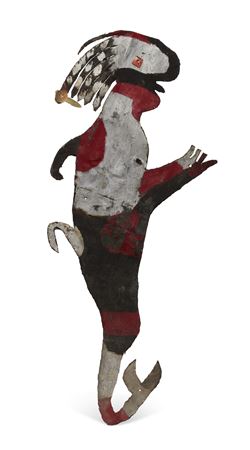
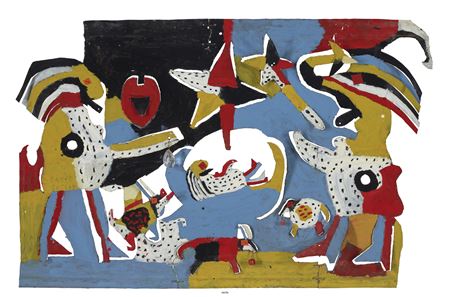
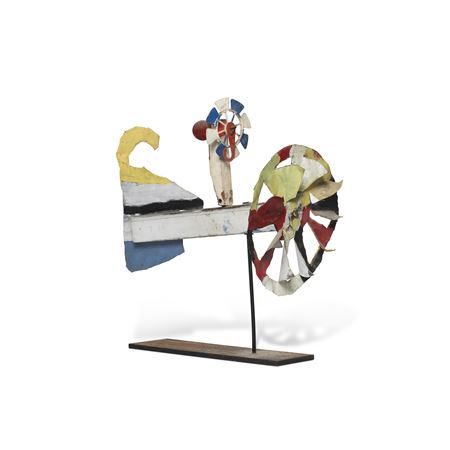
David Butler: 1898-1997, lived and worked in Patterson, Louisiana. One of the first recognized stars of Southern African-American yard art, David Butler installed a fantastic tin zoological... Read full biography
David Butler: 1898-1997, lived and worked in Patterson, Louisiana. One of the first recognized stars of Southern African-American yard art, David Butler installed a fantastic tin zoological environment on and outside his home in Patterson, Louisiana, over the course of several decades. Butler... Read full biography
David Butler: 1898-1997, lived and worked in Patterson, Louisiana. One of the first recognized stars of Southern African-American yard art, David Butler installed a fantastic tin zoological environment on and outside his home in Patterson, Louisiana, over the course of several decades. Butler turned to art in middle age, after a work-related injury at a sawmill. But he managed to bridge his private environment and the broader art world, first rising to prominence with the landmark 1982... Read full biography
David Butler: 1898-1997, lived and worked in Patterson, Louisiana. One of the first recognized stars of Southern African-American yard art, David Butler installed a fantastic tin zoological environment on and outside his home in Patterson, Louisiana, over the course of several decades. Butler turned to art in middle age, after a work-related injury at a sawmill. But he managed to bridge his private environment and the broader art world, first rising to prominence with the landmark 1982 exhibition "Black Folk Art in America, 1930-1980" at the Corcoran Gallery, Washington, DC. Only a year later, his yard environment was dismantled when illness required him to move in with family, and Butler's prolific and site-specific practice transformed... Read full biography
David Butler: 1898-1997, lived and worked in Patterson, Louisiana. One of the first recognized stars of Southern African-American yard art, David Butler installed a fantastic tin zoological environment on and outside his home in Patterson, Louisiana, over the course of several decades. Butler turned to art in middle age, after a work-related injury at a sawmill. But he managed to bridge his private environment and the broader art world, first rising to prominence with the landmark 1982 exhibition "Black Folk Art in America, 1930-1980" at the Corcoran Gallery, Washington, DC. Only a year later, his yard environment was dismantled when illness required him to move in with family, and Butler's prolific and site-specific practice transformed into the production of discrete objects intended for sale on the art market. The classic works for which he is known are brightly-c... Read full biography
David Butler - Art Prices in Auction LotsAuction Lots