Frédéric Bruly Bouabré was born in Zéprégüé, Côte d'Ivoire, in 1923 and is recognized as one of the greatest contemporary artists from West Africa. He was amongst the first of his generation from... Read full biography
Frédéric Bruly Bouabré was born in Zéprégüé, Côte d'Ivoire, in 1923 and is recognized as one of the greatest contemporary artists from West Africa. He was amongst the first of his generation from Côte d'Ivoire to be educated by the French colonial government. He was a self-taught artist - in the... Read full biography
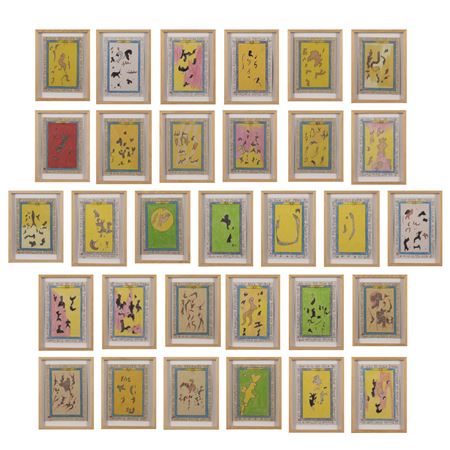
Frédéric Bruly Bouabré was born in Zéprégüé, Côte d'Ivoire, in 1923 and is recognized as one of the greatest contemporary artists from West Africa. He was amongst the first of his generation from Côte d'Ivoire to be educated by the French colonial government. He was a self-taught artist - in the West he might have been viewed as an "outsider" though this term is meaningless in the African context. A fascination with language and literature permeates his work. 'Alphabet Bété' (1991/92), which... Read full biography
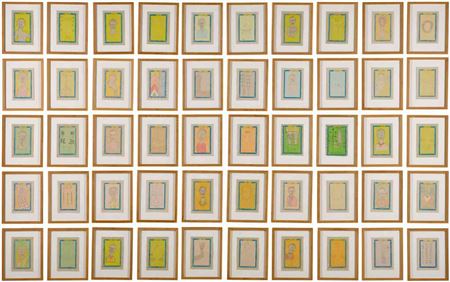
Frédéric Bruly Bouabré was born in Zéprégüé, Côte d'Ivoire, in 1923 and is recognized as one of the greatest contemporary artists from West Africa. He was amongst the first of his generation from Côte d'Ivoire to be educated by the French colonial government. He was a self-taught artist - in the West he might have been viewed as an "outsider" though this term is meaningless in the African context. A fascination with language and literature permeates his work. 'Alphabet Bété' (1991/92), which was shown at Documenta 2002, comprises an alphabet Bouabré invented, for Bété people, made up of over 400 signs which correspond to phonetic syllables. Bouabré was profoundly influenced by a vision he had on March 11th, 1948, when he witnessed seven... Read full biography
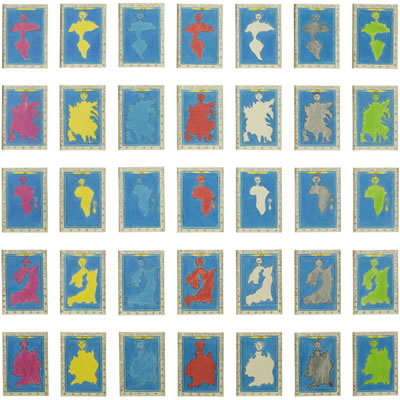
Frédéric Bruly Bouabré was born in Zéprégüé, Côte d'Ivoire, in 1923 and is recognized as one of the greatest contemporary artists from West Africa. He was amongst the first of his generation from Côte d'Ivoire to be educated by the French colonial government. He was a self-taught artist - in the West he might have been viewed as an "outsider" though this term is meaningless in the African context. A fascination with language and literature permeates his work. 'Alphabet Bété' (1991/92), which was shown at Documenta 2002, comprises an alphabet Bouabré invented, for Bété people, made up of over 400 signs which correspond to phonetic syllables. Bouabré was profoundly influenced by a vision he had on March 11th, 1948, when he witnessed seven suns orbiting round the sun. This revelatory experience lead him to embark on a lifelong mis... Read full biography
Frederic Bruly Bouabre - Art Prices in Auction LotsAuction Lots