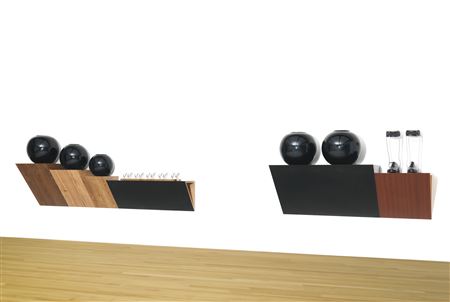
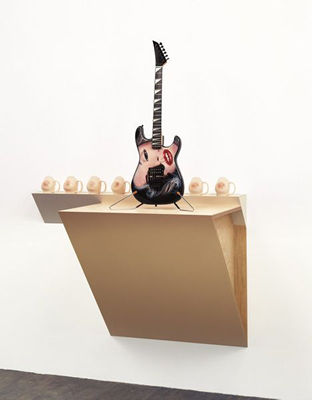
Conceptual-installation artist Haim Steinbach was born in Rehovot, Israel in 1944. He now lives and works in New York City where he pursues his intellectualization of art. His shelf sculptures are... Read full biography
Conceptual-installation artist Haim Steinbach was born in Rehovot, Israel in 1944. He now lives and works in New York City where he pursues his intellectualization of art. His shelf sculptures are devices of endless variety, but their parameters are fixed. Typically, Steinbach chooses banal objects... Read full biography
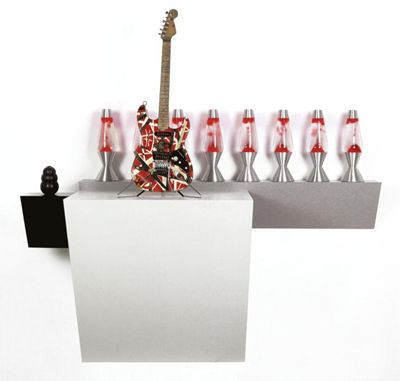
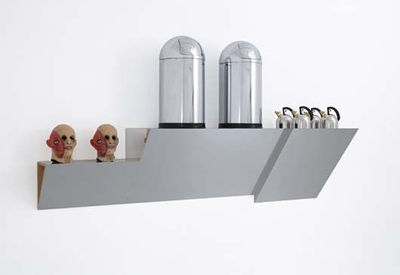
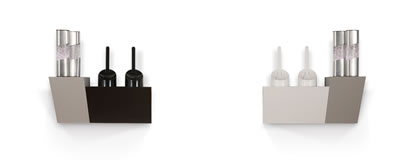
Conceptual-installation artist Haim Steinbach was born in Rehovot, Israel in 1944. He now lives and works in New York City where he pursues his intellectualization of art. His shelf sculptures are devices of endless variety, but their parameters are fixed. Typically, Steinbach chooses banal objects from everyday life and arranges them on plastic-laminated, triangular-wedge shelving units. The interior angles of the triangular units are constant90, 50, and 40 degreesand they always relate to the... Read full biography
Conceptual-installation artist Haim Steinbach was born in Rehovot, Israel in 1944. He now lives and works in New York City where he pursues his intellectualization of art. His shelf sculptures are devices of endless variety, but their parameters are fixed. Typically, Steinbach chooses banal objects from everyday life and arranges them on plastic-laminated, triangular-wedge shelving units. The interior angles of the triangular units are constant90, 50, and 40 degreesand they always relate to the objects on top through volume and color. Steinbach has proposed parallels between the structure of his works and game boards, the sequence of pitches in musical scales, and the arrangement of goods on department-store shelves. "Ultra red #2," a... Read full biography
Conceptual-installation artist Haim Steinbach was born in Rehovot, Israel in 1944. He now lives and works in New York City where he pursues his intellectualization of art. His shelf sculptures are devices of endless variety, but their parameters are fixed. Typically, Steinbach chooses banal objects from everyday life and arranges them on plastic-laminated, triangular-wedge shelving units. The interior angles of the triangular units are constant90, 50, and 40 degreesand they always relate to the objects on top through volume and color. Steinbach has proposed parallels between the structure of his works and game boards, the sequence of pitches in musical scales, and the arrangement of goods on department-store shelves. "Ultra red #2," a typical Steinbach shelf sculpture, features four ruby-golden lava lamps, nine russet cooking pots, and six digital alarm clocks with blinkin... Read full biography
Haim Steinbach - Art Prices in Auction LotsAuction Lots