Page loaded successfully. Showing biography for Haim Steinbach.
Haim Steinbach BIOGRAPHY
Born 1944 Rehovot, Israel. Known for: Sculptor-constructions, installation.
Conceptual-installation artist Haim Steinbach was born in Rehovot, Israel in 1944. He now lives and works in New York City where he pursues his intellectualization of art. His shelf sculptures are... Read full biography
Conceptual-installation artist Haim Steinbach was born in Rehovot, Israel in 1944. He now lives and works in New York City where he pursues his intellectualization of art. His shelf sculptures are devices of endless variety, but their parameters are fixed. Typically, Steinbach chooses banal objects... Read full biography
Conceptual-installation artist Haim Steinbach was born in Rehovot, Israel in 1944. He now lives and works in New York City where he pursues his intellectualization of art. His shelf sculptures are devices of endless variety, but their parameters are fixed. Typically, Steinbach chooses banal objects from everyday life and arranges them on plastic-laminated, triangular-wedge shelving units. The interior angles of the triangular units are constant90, 50, and 40 degreesand they always relate to the... Read full biography
Conceptual-installation artist Haim Steinbach was born in Rehovot, Israel in 1944. He now lives and works in New York City where he pursues his intellectualization of art. His shelf sculptures are devices of endless variety, but their parameters are fixed. Typically, Steinbach chooses banal objects from everyday life and arranges them on plastic-laminated, triangular-wedge shelving units. The interior angles of the triangular units are constant90, 50, and 40 degreesand they always relate to the objects on top through volume and color. Steinbach has proposed parallels between the structure of his works and game boards, the sequence of pitches in musical scales, and the arrangement of goods on department-store shelves. "Ultra red #2," a... Read full biography
Conceptual-installation artist Haim Steinbach was born in Rehovot, Israel in 1944. He now lives and works in New York City where he pursues his intellectualization of art. His shelf sculptures are devices of endless variety, but their parameters are fixed. Typically, Steinbach chooses banal objects from everyday life and arranges them on plastic-laminated, triangular-wedge shelving units. The interior angles of the triangular units are constant90, 50, and 40 degreesand they always relate to the objects on top through volume and color. Steinbach has proposed parallels between the structure of his works and game boards, the sequence of pitches in musical scales, and the arrangement of goods on department-store shelves. "Ultra red #2," a typical Steinbach shelf sculpture, features four ruby-golden lava lamps, nine russet cooking pots, and six digital alarm clocks with blinkin... Read full biography
Artist Biography
Biography page for Haim Steinbach ((Born 1944)), known for Sculptor-constructions, installation. Showing 1 biographical entries and 0 sample artworks.
Haim Steinbach - Artist Info
About Haim Steinbach
Biography from the Archives of askART
 Conceptual-installation artist Haim Steinbach was born in Rehovot, Israel in 1944. He now lives and works in New York City where he pursues his intellectualization of art.
His shelf sculptures are devices of endless variety, but their parameters are fixed. Typically, Steinbach chooses banal objects from everyday life and arranges them on plastic-laminated, triangular-wedge shelving units. The interior angles of the triangular units are constant90, 50, and 40 degreesand they always relate to the objects on top through volume and color. Steinbach has proposed parallels between the structure of his works and game boards, the sequence of pitches in musical scales, and the arrangement of goods on department-store shelves.
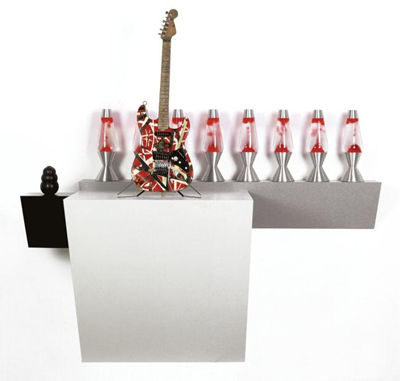
"Ultra red #2," a typical Steinbach shelf sculpture, features four ruby-golden lava lamps, nine russet cooking pots, and six digital alarm clocks with blinking scarlet readouts. Just as the lava lamps and clocks continuously mutate, so, too, "Ultra red #2" resists any fixed meaning. A fundamental issue it raises is one of language. The title, perhaps citing the names given to paint colors, focuses attention on an element that is common to the objects and the shelvesthey are all some shade of red.
Steinbach's approach to "red" is similar to that of the linguist remarking on the many words for "snow" used by the Eskimos. It is an anthropological perspective. Steinbach is fascinated by the way physical reality invariably shapes local linguistic or cultural customs. Because "red" exists as an idea above and beyond its infinite physical variations, we can refer to the cooking pots and lava lamps as red, and thereby find a link between them.
Steinbach's work has often been understood in terms of its implied commentary on consumer culture and on the hidden aesthetic in consumer products. "Ultra red #2" bears this out with its reference to design from the 1960s through the 1980s. But this accounts for only one aspect of the work. Steinbach highlights the contiguous illogic of the placement of objects in the world, arranging the elements of his sculptures to reflect their original accidental juxtapositions. He has also explored other kinds of juxtapositions, using objects as metaphors for race, age, and culture.
By using items that are readily available and easily replaceable, Steinbach tried to undermine the fetishization of the art object. This monumental triptych made of household wares suggests that the artistic stacking of forms is as relative a construction as the development of different dialects.
(by Cornelia Lauf)
Source: http://www.guggenheimcollection.org/site/artist_work_md_1471.html