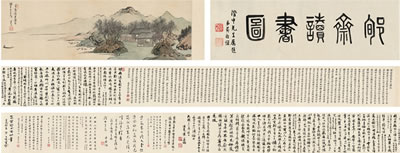
Pu Hsin-Yu was born in the royal imperial Manchu family in Beijing in 1896 and he was popularly known as the "Three Masters Accross the Straits" with Chang Dai-Chien and Huang Jun-Bi. Although Pu... Read full biography
Pu Hsin-Yu was born in the royal imperial Manchu family in Beijing in 1896 and he was popularly known as the "Three Masters Accross the Straits" with Chang Dai-Chien and Huang Jun-Bi. Although Pu Hsin-Yu was both educated at Peking University and Humboldt University Berlin, Germany, he abandoned... Read full biography
Pu Hsin-Yu was born in the royal imperial Manchu family in Beijing in 1896 and he was popularly known as the "Three Masters Accross the Straits" with Chang Dai-Chien and Huang Jun-Bi. Although Pu Hsin-Yu was both educated at Peking University and Humboldt University Berlin, Germany, he abandoned the pressing Western culture and constantly advocated traditional Chinese philosophy. As a descendant of the Qing dynasty royalty, he delved into the arts since childhood and produced otherworldly forms... Read full biography
Pu Hsin-Yu was born in the royal imperial Manchu family in Beijing in 1896 and he was popularly known as the "Three Masters Accross the Straits" with Chang Dai-Chien and Huang Jun-Bi. Although Pu Hsin-Yu was both educated at Peking University and Humboldt University Berlin, Germany, he abandoned the pressing Western culture and constantly advocated traditional Chinese philosophy. As a descendant of the Qing dynasty royalty, he delved into the arts since childhood and produced otherworldly forms of verse and calligraphy. He received a privately tutored classical education that included training in Chinese painting and calligraphy and he excelled at both. He learned by copying ancient Chinese masterpieces in the royal collection and his... Read full biography
Pu Hsin-Yu was born in the royal imperial Manchu family in Beijing in 1896 and he was popularly known as the "Three Masters Accross the Straits" with Chang Dai-Chien and Huang Jun-Bi. Although Pu Hsin-Yu was both educated at Peking University and Humboldt University Berlin, Germany, he abandoned the pressing Western culture and constantly advocated traditional Chinese philosophy. As a descendant of the Qing dynasty royalty, he delved into the arts since childhood and produced otherworldly forms of verse and calligraphy. He received a privately tutored classical education that included training in Chinese painting and calligraphy and he excelled at both. He learned by copying ancient Chinese masterpieces in the royal collection and his paintings are based on the literati landscape tradition of the late Ming but he also studied the work of th... Read full biography