Page loaded successfully. Showing biography for Arthur Hoeber.
Arthur Hoeber BIOGRAPHY
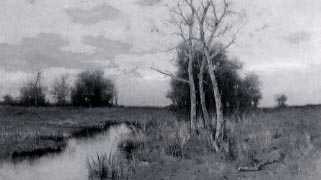
1854 Nutley, New Jersey - 1915 Nutley, New Jersey. Known for: Tonalist New England landscape and skyscape painting.
Born in Nutley, New Jersey, Arthur Hoeber became a noted landscape artist in Tonalist style, with simple composition, broad skyscapes, and serene, quiet, poetic views often inspired by coastal... Read full biography
Born in Nutley, New Jersey, Arthur Hoeber became a noted landscape artist in Tonalist style, with simple composition, broad skyscapes, and serene, quiet, poetic views often inspired by coastal scenery of Cape Cod and Long Island. Luminism was a part of his painting style, with reflected bright... Read full biography
Born in Nutley, New Jersey, Arthur Hoeber became a noted landscape artist in Tonalist style, with simple composition, broad skyscapes, and serene, quiet, poetic views often inspired by coastal scenery of Cape Cod and Long Island. Luminism was a part of his painting style, with reflected bright lights often appearing in his dramatic, panoramic cloud-filled skies. His paintings were sometimes referred to as "spare meditations" (Elliott), and usually his titles referenced the exact location of the... Read full biography
Born in Nutley, New Jersey, Arthur Hoeber became a noted landscape artist in Tonalist style, with simple composition, broad skyscapes, and serene, quiet, poetic views often inspired by coastal scenery of Cape Cod and Long Island. Luminism was a part of his painting style, with reflected bright lights often appearing in his dramatic, panoramic cloud-filled skies. His paintings were sometimes referred to as "spare meditations" (Elliott), and usually his titles referenced the exact location of the work, the season or time of day. He also did figure and genre subjects including peasants toiling in the fields when he was painting in the French countryside. As a young man, Hoeber did much sketching and painting in watercolor, and later took... Read full biography
Born in Nutley, New Jersey, Arthur Hoeber became a noted landscape artist in Tonalist style, with simple composition, broad skyscapes, and serene, quiet, poetic views often inspired by coastal scenery of Cape Cod and Long Island. Luminism was a part of his painting style, with reflected bright lights often appearing in his dramatic, panoramic cloud-filled skies. His paintings were sometimes referred to as "spare meditations" (Elliott), and usually his titles referenced the exact location of the work, the season or time of day. He also did figure and genre subjects including peasants toiling in the fields when he was painting in the French countryside. As a young man, Hoeber did much sketching and painting in watercolor, and later took evening classes at Cooper Union in New York City and then the Art Students League. One of his first te... Read full biography
Artist Biography
Biography page for Arthur Hoeber ((1854 - 1915)), known for Tonalist New England landscape and skyscape painting. Showing 2 biographical entries and 0 sample artworks.
Arthur Hoeber - Artist Info
About Arthur Hoeber
Biography from the Archives of askART
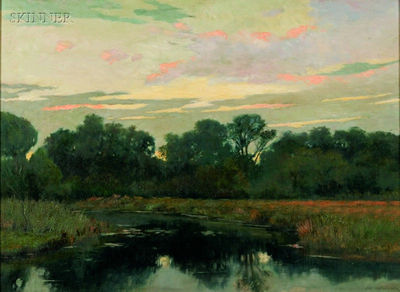 Born in Nutley, New Jersey, Arthur Hoeber became a noted landscape artist in Tonalist style, with simple composition, broad skyscapes, and serene, quiet, poetic views often inspired by coastal scenery of Cape Cod and Long Island. Luminism was a part of his painting style, with reflected bright lights often appearing in his dramatic, panoramic cloud-filled skies.
His paintings were sometimes referred to as "spare meditations" (Elliott), and usually his titles referenced the exact location of the work, the season or time of day. He also did figure and genre subjects including peasants toiling in the fields when he was painting in the French countryside.
As a young man, Hoeber did much sketching and painting in watercolor, and later took evening classes at Cooper Union in New York City and then the Art Students League. One of his first teachers was James Carroll Beckwith. In 1881, he went to England, having obtained a letter of introduction from an actor, Lew Wallack to Wallack's brother-in-law, the painter Sir John Millais.
At Millais's suggestion, Hoeber went to France, where he spent five years as a student of Jean Leon Gerome, one of the foremost historical painters of his era and a renowned teacher at the Ecole des Beaux Arts. Hoeber also studied privately with Gustave Courtois. From 1882 to 1885, he exhibited at the Paris Salon and spent his summers painting in the countryside including at Pont Aven and Concarneau. There, like many other American artists, he painted landscapes and rural genre scenes with peasants.
Returning to New York City, he began to paint almost exclusively landscape subjects. In 1892, he moved to Nutley, New Jersey, close to New York, and did canvases reflecting the many tital wetlands of the area. He also spent time painting in Hyannisport, Massachusetts..
In the United States, exhibition venues included The Pennsylvania Academy of the Fine Arts. For many years he wrote art criticism for Harper's Weekly, The New York Times, and New York Globe. Many of his themes referenced his disapproval of modernism and avant-garde painters such as Max Weber and Henri Matisse. In 1912, a book he wrote was published, The Barbizon Painters: Being the Story of the Men of Thirty.
Sources include:
Carol Lowrey, "Arthur Hoeber", The Poetic Vision: American Tonalism, Exhibition catalogue of Spanierman Galleries, LLC, 2005, p. 142.
Susan Sipple Elliott, 'An American Collection', American Art Review, 6/1999, p. 104Biography from Aspire Auctions, Cleveland
Born in Nutley, New Jersey, Arthur Hoeber became a noted landscape artist in Tonalist style, with simple composition, broad skyscapes, and serene, quiet, poetic views often inspired by coastal scenery of Cape Cod and Long Island.
Luminism was a part of his painting style, with reflected bright lights often appearing in his dramatic, panoramic cloud-filled skies. His paintings were sometimes referred to as "spare meditations" (Elliott), and usually his titles referenced the exact location of the work, the season or time of day.
He also did figure and genre subjects including peasants toiling in the fields when he was painting in the French countryside.