Page loaded successfully. Showing biography for William Rush.
William Rush BIOGRAPHY
1756 Philadelphia, Pennsylvania - 1833 Philadelphia, Pennsylvania. Known for: Sculptor-marine figureheads, portrait.
Lots Sold: 100%, High Price: Subscribe.
A prominent carver of figureheads for ships, one of the founders of the Pennsylvania Academy of the Fine Arts, and likely America's first sculptor in the fine-art tradition, William Rush became well... Read full biography
A prominent carver of figureheads for ships, one of the founders of the Pennsylvania Academy of the Fine Arts, and likely America's first sculptor in the fine-art tradition, William Rush became well known in Philadelphia in the late 18th and early 19th centuries. For fifty years, he oversaw a... Read full biography
A prominent carver of figureheads for ships, one of the founders of the Pennsylvania Academy of the Fine Arts, and likely America's first sculptor in the fine-art tradition, William Rush became well known in Philadelphia in the late 18th and early 19th centuries. For fifty years, he oversaw a successful woodcarving shop with many apprentices at a time when Philadelphia was challenging Boston as the primary shipbuilding center in the United States. He is credited with introducing to America the... Read full biography
A prominent carver of figureheads for ships, one of the founders of the Pennsylvania Academy of the Fine Arts, and likely America's first sculptor in the fine-art tradition, William Rush became well known in Philadelphia in the late 18th and early 19th centuries. For fifty years, he oversaw a successful woodcarving shop with many apprentices at a time when Philadelphia was challenging Boston as the primary shipbuilding center in the United States. He is credited with introducing to America the French style of figurehead, which was full length and called a "walking figure", meaning they were freestanding and appeared to be walking forward. These figures were in contrast to the prevalent English style, which was a stiff figure placed across... Read full biography
A prominent carver of figureheads for ships, one of the founders of the Pennsylvania Academy of the Fine Arts, and likely America's first sculptor in the fine-art tradition, William Rush became well known in Philadelphia in the late 18th and early 19th centuries. For fifty years, he oversaw a successful woodcarving shop with many apprentices at a time when Philadelphia was challenging Boston as the primary shipbuilding center in the United States. He is credited with introducing to America the French style of figurehead, which was full length and called a "walking figure", meaning they were freestanding and appeared to be walking forward. These figures were in contrast to the prevalent English style, which was a stiff figure placed across a vertical timber of the bow. In addition to marine figureheads, Rush created allegorical figures and portr... Read full biography
Artist Biography
Biography page for William Rush ((1756 - 1833)), known for Sculptor-marine figureheads, portrait. Showing 2 biographical entries and 0 sample artworks.
William Rush - Artist Info
About William Rush
Biography from the Archives of askART
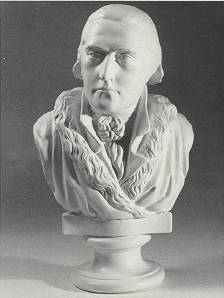 A prominent carver of figureheads for ships, one of the founders of the Pennsylvania Academy of the Fine Arts, and likely America's first sculptor in the fine-art tradition, William Rush became well known in Philadelphia in the late 18th and early 19th centuries. For fifty years, he oversaw a successful woodcarving shop with many apprentices at a time when Philadelphia was challenging Boston as the primary shipbuilding center in the United States. He is credited with introducing to America the French style of figurehead, which was full length and called a "walking figure", meaning they were freestanding and appeared to be walking forward. These figures were in contrast to the prevalent English style, which was a stiff figure placed across a vertical timber of the bow. In addition to marine figureheads, Rush created allegorical figures and portrait busts, working occasionally in plaster and terracotta, although he primarily worked in wood. One of his biggest projects was a full-length wooden statue George Washington, first exhibited in 1815 at the Pennsylvania Academy.
For the Chestnut Street Theater in 1908, he made the figures of Comedy and Tragedy. In 1809, he did the Water Nymph and Bittern, for the Neo-Classical Centre Square Water Works, and in 1824, for the Marquis de Lafayette's tour of the United States, Rush carved a portrait of Lafayette (now at the Pennsylvania Academy of the Fine Arts), and did two monumental sculptures, Wisdom and Justice. These figures were placed on the Chestnut Street triumphal arch, erected in Lafayette's honor. His last major pieces were in 1828 and were reclining figures titled The Schuylkill River Chained and Freed.
Bush also did numerous portrait busts besides that of Layfayette. Subjects included doctors Casper Wistar, Philip Syng Physick and Benjamin Rush, the latter a cousin of the artist; Oliver Hazard Perry, Andrew Jackson and Winfield Scott. He completed portraits of himself and his daughter, Elizabeth (circa 1822).
William Rush was born in Philadelphia and learned his craft of working with wood from his father, who was a carver of ship's models. Rush was also an apprentice of a man named Edward Cutbush, an artisan from London. 1790 is the earliest date found that Rush was carving figureheads.
He was also distinguished as one of the founders in 1794 of the Columbianum, which was the first art organization in America. A cooperative society of thirty artists, they sponsored one exhibition, and then terminated their activities. Rush also was one of the first directors of the Pennsylvania Academy of the Fine Arts.
William Rush died in 1833. Many of his works are in the Philadelphia Museum of Art.
Sources include:
Matthew Baigell, Dictionary of American Artists
Peter Falk, Who Was Who in American Art
Ralph Sessions, "William Rush and the American Figurehead", The Magazine Antiques, Fall, 2005, pp. 148-153
Biography from The Masonic Library And Museum Of Pennsylvania
The following biography has been submitted by Laura Libert, Curator of The Masonic Library and Museum of Pennsylvania.
Rush, William (American, 1756-1833)
William Rush is commonly regarded as America's first great sculptor. Born on July 4, 1767, the son of a ship carpenter (who trained his son in the use of a chisel and mallet), Rush began his career carving ship figureheads and was commissioned by the newly established Navy of the United States to design figureheads for six frigates during the Revolutionary War (in which he also served as an officer). Afterwards Rush established a shop on North Front Street, Philadelphia, and in 1805, along with Charles Willson Peale and other well-known artists, founded the Pennsylvania Academy of the Fine Arts, serving as a member of the first Board of Directors.
Rush received and executed numerous important commissions for monumental wood sculpture throughout the city, including "Comedy" and "Tragedy" for the New Theater (designed by Benjamin Henry Latrobe, English, 1764-1820 in 1808) on Chestnut Street and "Water Nymph and Bittern" for the Center Square Waterworks (also designed by Latrobe, c.1809). "Water Nymph and Bittern" was created as a piece of outdoor public sculpture--a concept new to many Americans.
Nearly all of Rush's celebrated sculptures are already in public collections and even lesser works are considered rare and very desirable. The most recent large-scale exhibit of Rush's works was held at the Pennsylvania Academy of the Fine Arts in 1982. The accompanying exhibit catalog, "William Rush: American Sculptor," provides biographical information as well as photographs and details on many of his existingworks. Now through October 2003, the Wistar Institute of Philadelphia will be exhibiting "Mammoth Scale: The Anatomical Sculptures of William Rush." A catalog also accompanies this exhibit.