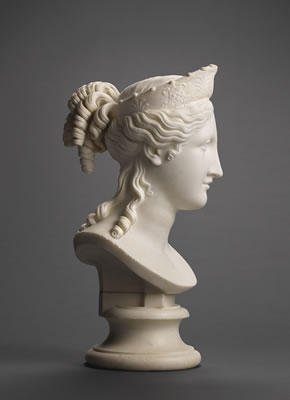
Antonio Canova (1757-1822). Italian sculptor, Antonio Canova was famous for his marble sculptures of delicate nudes. Working after the excesses of the Baroque* style, he carved a niche for himself in... Read full biography
Antonio Canova (1757-1822). Italian sculptor, Antonio Canova was famous for his marble sculptures of delicate nudes. Working after the excesses of the Baroque* style, he carved a niche for himself in the world of neo-classical* art. Called 'the supreme minister of beauty' and 'a unique and truly... Read full biography
Antonio Canova (1757-1822). Italian sculptor, Antonio Canova was famous for his marble sculptures of delicate nudes. Working after the excesses of the Baroque* style, he carved a niche for himself in the world of neo-classical* art. Called 'the supreme minister of beauty' and 'a unique and truly divine man' by contemporaries, Canova was highly acclaimed in his time. His international reputation as one of the greatest neo-classical sculptors clearly surpassed that of John Flaxman and John... Read full biography
Antonio Canova (1757-1822). Italian sculptor, Antonio Canova was famous for his marble sculptures of delicate nudes. Working after the excesses of the Baroque* style, he carved a niche for himself in the world of neo-classical* art. Called 'the supreme minister of beauty' and 'a unique and truly divine man' by contemporaries, Canova was highly acclaimed in his time. His international reputation as one of the greatest neo-classical sculptors clearly surpassed that of John Flaxman and John Gibson. His most famous works include Apollo Crowning Himself (1781, J Paul Getty Museum, Los Angeles), Theseus and the Minotaur (1781, Victoria and Albert Museum), Cupid and Psyche (1786-93, Louvre, Paris), and Paolina Bonaparte Borghese as Venus... Read full biography
Antonio Canova (1757-1822). Italian sculptor, Antonio Canova was famous for his marble sculptures of delicate nudes. Working after the excesses of the Baroque* style, he carved a niche for himself in the world of neo-classical* art. Called 'the supreme minister of beauty' and 'a unique and truly divine man' by contemporaries, Canova was highly acclaimed in his time. His international reputation as one of the greatest neo-classical sculptors clearly surpassed that of John Flaxman and John Gibson. His most famous works include Apollo Crowning Himself (1781, J Paul Getty Museum, Los Angeles), Theseus and the Minotaur (1781, Victoria and Albert Museum), Cupid and Psyche (1786-93, Louvre, Paris), and Paolina Bonaparte Borghese as Venus Victorious (1808, Rome, Borghese). His tomb for Pope Clement XIV invited direct comparison wi... Read full biography
Antonio Canova - Artist Info
About Antonio Canova: Books
Books & Publications (3)
Publications based on askART research. List may not be comprehensive.
The MFA Handbook: A Guide to the Collections of the Museum of Fine Arts, Boston
2009
Rogers, Malcolm (Introduction) and Gilian Shallcross,(Entores
400 pages (color)
Accents on Artists A fact-filled pronunciation guide. Over 800 artist’s names you should know…
1996
Barbara and Peter Toohil
363 pages (color)
Yankee Stonecutters: The First American School of Sculpture, 1800-1850