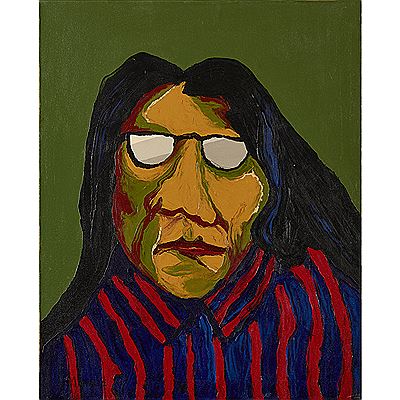
Clifford Lloyd Maracle (1944–1996) was from the Mohawk Nation, Tyendinaga Reserve near Deseronto, Ontario. Both a painter and a sculptor, he was best known for his depictions of the plight of urban... Read full biography
Clifford Lloyd Maracle (1944–1996) was from the Mohawk Nation, Tyendinaga Reserve near Deseronto, Ontario. Both a painter and a sculptor, he was best known for his depictions of the plight of urban Indians in the 1970s. He was associated with Arthur Shilling and Gary Miller (artist), and was... Read full biography
Clifford Lloyd Maracle (1944–1996) was from the Mohawk Nation, Tyendinaga Reserve near Deseronto, Ontario. Both a painter and a sculptor, he was best known for his depictions of the plight of urban Indians in the 1970s. He was associated with Arthur Shilling and Gary Miller (artist), and was influenced by Fritz Scholder, Francis Bacon, Karel Appel and Edvard Munch. He did not rely on traditional motifs but rather established himself as a leader of a new expressionistic style among First Nations... Read full biography
Clifford Lloyd Maracle (1944–1996) was from the Mohawk Nation, Tyendinaga Reserve near Deseronto, Ontario. Both a painter and a sculptor, he was best known for his depictions of the plight of urban Indians in the 1970s. He was associated with Arthur Shilling and Gary Miller (artist), and was influenced by Fritz Scholder, Francis Bacon, Karel Appel and Edvard Munch. He did not rely on traditional motifs but rather established himself as a leader of a new expressionistic style among First Nations artists. Maracle came from a large family of 10 children but his father left the family when the children were young. His mother received pressure from social workers who believed a single mother could not successfully raise the children;... Read full biography
Clifford Lloyd Maracle (1944–1996) was from the Mohawk Nation, Tyendinaga Reserve near Deseronto, Ontario. Both a painter and a sculptor, he was best known for his depictions of the plight of urban Indians in the 1970s. He was associated with Arthur Shilling and Gary Miller (artist), and was influenced by Fritz Scholder, Francis Bacon, Karel Appel and Edvard Munch. He did not rely on traditional motifs but rather established himself as a leader of a new expressionistic style among First Nations artists. Maracle came from a large family of 10 children but his father left the family when the children were young. His mother received pressure from social workers who believed a single mother could not successfully raise the children; eventually, they left the reserve to avoid the conflicts. These events may have contributed to Maracle's strong feelings towards the injustices an... Read full biography
Clifford Maracle - Artist Info
About Clifford Maracle: Books
Books & Publications (4)
Publications based on askART research. List may not be comprehensive.
The Powwow: An Art History (Mackenzie Art Gallery) (Exhibition catalog)
2000
Martin, Lee-Ann, Bob Boyer, Bob and Edward Goodbird
75 pages (color)
The Helen E. Band Collection of First Nations Art: From the Permanent Collection of the Thunder Bay Art Gallery
1998
Clark, Janet
48 pages (color)
Indian Art '84 (Woodland Indian Cultural Educational Centre)
1984
Hill, Tom
52 pages
A Selection of Work: Contemporary Indian Art, the Trail from the Past to the Future (Mackenzie Gallery at Trent University, Peterborough, Ontario) (Exhibition catalog)